


If you are dealing with glass bottle cap leaking, the most frustrating part is that the leak often looks random. One case leaks in transit, the next one stays dry. A pallet passes your line checks, then shows up with sticky cartons two weeks later. In reality, leakage tends to follow a small set of repeatable failure paths, and each path has a straightforward way to verify it and a specific fix you can apply without guessing.
Answer: Glass bottle cap leaking: causes and fixes
Glass bottle cap leaking is usually caused by one of five issues: the cap is applied outside the right torque window, the bottle neck finish and cap do not match cleanly, the liner is not behaving well with the product or process, the capping setup is creating uneven application, or post-capping stress (temperature swings, vibration, time) opens a leak path.
The fastest way to verify the cause is to (1) locate exactly where the liquid is escaping, (2) check whether torque is stable across samples, and (3) confirm the neck finish fit and liner behavior under the same conditions the product will experience in storage and distribution.
Fixes generally fall into three categories: line-side adjustments (to stabilize application), specification fixes (cap size, liner selection, or closure choice), and prevention gates (simple QC checks that stop the same problem from returning). If you are sourcing a closure for a beverage line, a practical starting point is reviewing proven aluminium options such as 28mm aluminium caps for beverage glass bottles and then verifying fit and liner choice through a structured process rather than trial-and-error.
Causes: Why glass bottle caps leak in real production
Torque is outside the workable window
Torque is the most common culprit because it can be “close enough” during a short run and still fail in distribution. Under-torque tends to leak quickly, often after vibration or when bottles are inverted. Over-torque can also leak, especially with certain liners, because excessive compression can create uneven sealing or cause the liner to relax and rebound later. In practice, the tell is not only the average torque but the spread: when torque varies widely from bottle to bottle, you get a mixed pattern of failures that looks unpredictable.
A common real-world example is a line that changes caps mid-shift. The first hour after the change looks fine, then leakage shows up after cartons are stacked and the load settles. Often, the line is applying inconsistent torque rather than consistently “wrong” torque.
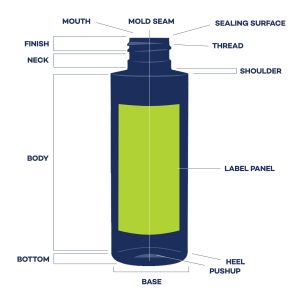
Neck finish mismatch or finish variability
“Standard” does not always mean interchangeable. Two neck finishes that look similar can still behave differently once you factor in tolerances, thread form, finish height, and the land area where the liner actually seals. Glass variability matters as well. If the sealing surface has subtle defects or the finish dimensions drift, the cap may feel secure but never achieve a continuous seal.
Mismatch problems often appear as leaks that are sensitive to orientation. Upright bottles may look fine, while inverted bottles show slow seepage. That is a clue that the liner is not contacting the finish consistently.
Liner behavior does not match the product or the process
The liner is where sealing really happens. In B2B packaging, many “leaking cap” complaints are actually liner-selection issues. A liner that performs well on still water can behave differently on carbonated drinks. High-alcohol spirits may interact with liner materials over long storage cycles. Hot-fill processes can change compression and recovery behavior after cooling.
If your product sits in warehouses, crosses climate zones, or spends time in warm containers, liner behavior becomes more important than it seems during short line trials. That is why experienced teams treat liner choice as part of the closure system, not an afterthought.
Capping setup creates uneven application
Even with the right cap and bottle, an unstable capping setup can create leakage by producing inconsistent application. Misalignment, wear, and intermittent slippage can generate a pattern where “only some bottles leak.” From a troubleshooting standpoint, the key is to connect leakage back to process signals: specific lanes, a particular capper head, shift changes, or maintenance cycles.
When leakage is clustered—same carton positions, same period in the run—process instability is often the underlying driver.
Post-capping stress opens a leak path
Many leaks are not created at the moment of capping; they are revealed later. Temperature cycling can change internal pressure and alter liner compression. Vibration can back off marginally applied closures. Time can allow slow relaxation in materials. These effects are why a bottle can pass a quick wipe test on the line and still arrive wet at a distributor.
If your leakage shows up “after transport,” treat distribution stress as part of the test condition, not a separate mystery.
Verify: How to confirm the root cause quickly
Locate the leak path before you touch the line settings
Start by making the leak visible and repeatable. Dry the bottle and closure thoroughly, invert it for a consistent time window, then check where the moisture first appears. A leak at the skirt area may suggest a poor seal at the liner/finish interface. Moisture tracking down from the top can point to cap deformation or a compromised seal line. If the leak only appears after agitation, suspect marginal torque or vibration sensitivity.
This step sounds basic, but it prevents wasted effort. Many teams adjust torque first, then discover later that the finish fit or liner choice was the primary issue.
Check whether torque is stable, not just “high enough”
Torque should be measured consistently and logged in a way that shows variability. Do not rely on “hand feel,” especially on glass. Pull samples across the run, including different capper heads or lanes if applicable. If you see a wide range of opening torque, leakage will often correlate with the low end of that range, particularly after vibration or temperature change.
A practical approach is to treat torque as a process signal: if it shifts after a maintenance action, a cap change, or a temperature change in the filling hall, that shift is likely part of the leak story.
Confirm neck finish fit using drawings or physical samples
When you suspect mismatch, confirm fit with objective inputs. That can be a bottle finish drawing, or physical samples sent for measurement. Fit confirmation is especially important when caps and bottles are sourced from different suppliers, because small tolerance stack-ups can turn into leakage at scale.
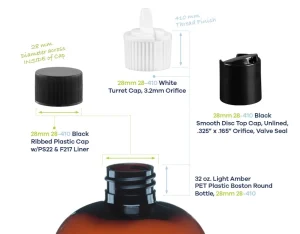
If you are working with a supplier that supports fit verification, you should use it. A structured workflow such as bottle neck and cap size confirmation service process is not administrative overhead; it is a fast way to eliminate mismatch variables before you start making process changes.
Verify liner suitability under real conditions
For liners, “it sealed once” is not proof. Verify under conditions that mimic reality: the product chemistry, the filling temperature, the time-to-cool for hot-fill, and the expected shelf or transit window. If you can reproduce leakage only after a temperature cycle or after a resting period, you are likely seeing liner recovery behavior or pressure changes opening a marginal seal.
If your product category is wine or spirits, where sealing and oxygen management are closely tied to quality perception, it is worth treating liner selection as part of the system. For example, wine screw caps with custom logo are typically used with an inner pad that supports consistent sealing after filling, but the performance still depends on fit and application stability.
Recreate distribution stress in a controlled way
You do not need a full lab to run a meaningful check. Use a controlled vibration simulation (even a standardized shake protocol) and a temperature cycle that reflects your shipping reality, then re-check for moisture and torque drift. If leakage appears only after this stress, the root cause is often marginal torque, mismatch tolerances, or a liner/process pairing that lacks enough margin.
This verification step is also a decision tool. If a system only seals when everything is perfect, it is not a robust system for scaled distribution.
Fix: Corrective actions that stop leaks and keep them from returning
Line-side fixes: stabilize application first
When torque is inconsistent, begin with stability rather than chasing a single number. Adjust the capping setup to reduce variation across heads and lanes. Confirm alignment, check for slippage, and monitor whether caps are being applied smoothly or intermittently. If you run hot-fill, account for the time window: torque can drift after cooling, and a stable process needs the right check timing.
Once application is stable, you can tune torque within a workable window that balances seal integrity and openability. In practice, stable “middle-of-range” torque often outperforms a higher target that is achieved inconsistently.
Specification fixes: change the cap size, liner, or closure choice
If fit confirmation shows mismatch, the fix is specification, not process. Match the cap diameter and height to the neck finish, and verify it with drawings or bottle samples rather than assumptions. If the liner is the weak link, select a liner that matches the product and distribution reality, especially for carbonation, alcohol content, and hot-fill.
For still beverages and high-throughput lines, commonly used sizes in aluminium caps include multiple 28mm height variants, and suitability depends on the bottle and product conditions rather than the cap alone. Product pages that list typical size families, such as 28×18mm, 28×17mm, and 28×16.5mm for certain beverage applications, are useful starting references, but your final choice should be based on neck finish confirmation and testing rather than catalogue numbers alone.
Prevention fixes: add a simple QA gate
Most “leaks that come back” happen because the fix was applied once but never embedded into routine checks. A practical prevention gate usually includes a torque check at a defined sampling plan, a sealing check for liner performance, and visual inspection for cap deformation or liner issues. The goal is not paperwork; it is early detection. If torque distribution widens, you catch it before cartons leave the site.
This is also where one-stop supply can reduce risk. When caps, bottles, and secondary packaging are coordinated, tolerance mismatch is less likely to be the hidden cause that keeps resurfacing.
What to send your supplier to get a reliable fix
When leakage becomes a supplier conversation, speed depends on the quality of inputs. The most helpful package includes bottle finish drawing or physical samples, product type and fill conditions, distribution expectations, and a few representative leaking and non-leaking samples. Add your torque readings and the conditions under which leakage occurs. With that, the supplier can recommend a cap size and liner pairing that has margin, not just a “fits on the neck” answer.
About Yantai Original
Yantai Original is a packaging supplier focused on bottle caps and related components for glass packaging projects, with an emphasis on flexible order quantities and fit verification. The company supplies multiple cap types, and it also supports combined supply of glass bottles and caps to reduce mismatch risk and help prevent leakage when projects scale. If you want a quick overview of capabilities and production approach, start here: Learn more about Yantai Original.
Conclusion
A leaking glass bottle cap is rarely “just a bad batch.” Most failures trace back to torque instability, finish mismatch, liner behavior, or stress that exposes a marginal seal. The fastest path to a durable fix is disciplined: identify the leak path, verify torque stability and finish fit, confirm liner performance under real conditions, and then apply the right corrective action at the line or specification level. When you add a lightweight QA gate, the same problem stops repeating—and your closure system becomes predictable under real distribution conditions, not just in a short trial run.
FAQs
Why is my glass bottle cap leaking after capping?
The most common reason is torque instability. A cap can look fine immediately after capping but loosen slightly after vibration or temperature change if it was applied at the low end of the torque range. Another frequent cause is that the neck finish and cap fit are marginal, so the liner never forms a continuous seal across the finish.
How do I know if torque is causing my glass bottle cap leaking problem?
If leakage is inconsistent across bottles from the same run, torque variation is a strong suspect. Measure opening torque across samples taken from different times, lanes, or capper heads. If you see a wide spread and leaks correlate with lower readings—especially after stress like shaking or temperature cycling—torque stability is likely part of the cause.
How do I confirm my neck finish matches my cap for glass bottles?
Use a bottle finish drawing or send a physical bottle sample for measurement. Visual similarity is not enough, because small differences in thread form, finish height, and sealing land can cause leakage at scale. A structured size confirmation process is typically faster and more reliable than repeated trial runs.
What liner works for hot-fill in glass bottles?
Hot-fill requires a liner that maintains a seal after heating and cooling, not only at the moment of application. A suitable liner depends on your exact fill temperature, cooling profile, and product chemistry, so the most practical approach is to test liner behavior under your real process conditions and check for torque drift after cooling.
Why does glass bottle cap leaking show up only after shipping?
Shipping introduces vibration, stacking load, and temperature swings. These stresses can open a marginal seal, especially if torque was low, the finish fit was borderline, or the liner relaxes over time. Recreating distribution stress in a controlled test often makes the root cause easier to see.


