


Packaging coordinators and bottling leads in smaller sparkling cellars face the same recurring constraints release after release: modest production runs, limited capital for packaging experiments, and steady pressure to deliver closures that read premium without requiring warehouse-scale commitments. In 2026, custom aluminum foil champagne capsules with low MOQ options separate themselves when they combine the classic metallic finish, reliable enclosure of cork and wire hood, and customization that remains realistic for lower-volume operations. The standard 34x115mm to 34x124mm dimensions cover most 750ml champagne necks effectively, with adjustments readily available for magnum or piccolo formats. Embossed logos or medallions, hot-stamped accents, custom metallic shades, and pleated or smooth skirt configurations continue to guide procurement decisions, particularly as direct-to-consumer channels and boutique tastings place greater weight on packaging that creates an immediate high-end impression.
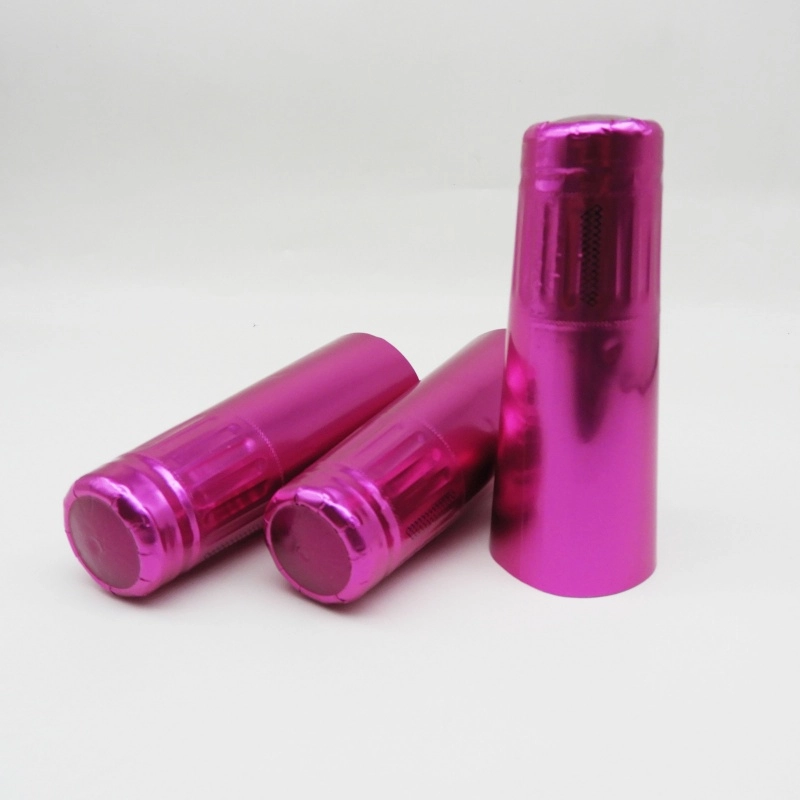
The decision reaches beyond appearance. Aluminum foil imparts a noticeable weight and reflective quality that photographs cleanly under tasting-room lights or smartphone flash, while the foil barrier helps protect delicate effervescence from light-induced degradation during shelf time. Producers working small lots gain the clearest benefit when suppliers provide adaptable minimums, rapid sample turnaround, and confirmed compatibility with typical sparkling bottle profiles. As boutique sparkling sales shift more toward tasting events and online platforms, capsules that integrate detailed customization with practical low-MOQ terms serve as a workable means to build brand recognition without carrying surplus through slower seasons.
2026 Trends Strengthening the Case for Low MOQ Custom Aluminum Foil Champagne Capsules
The craft sparkling segment persists in growth as drinkers pursue distinctive, place-specific bubblies over mainstream volumes. Digital storefronts and local tastings favor packaging components that convey artisanal intent from the outset—metallic foils interact naturally with light, embossed elements add tactile depth, and color coordination supports label storytelling. Tamper-evident protection holds firm importance; aluminum foil capsules secure the wire hood effectively while permitting uncomplicated removal.
Sustainability topics remain present in the category. Aluminum’s well-established recycling pathway resonates with environmentally conscious buyers, and select formulations now incorporate recycled content without altering crimp behavior or visual quality. Personalization continues to exert the strongest pull. Emerging producers seek raised logos on the disk, metallic highlights aligned with seasonal palettes, or matte finishes that suggest understated elegance. Legacy suppliers often enforce minimums that exclude smaller labels. Low MOQ structures remove that restriction, enabling trials on restricted bottlings and progressive scaling as market response strengthens.
Logistics consistency adds significant weight. Favorable port positioning reduces international transit windows, especially critical when bottling aligns with harvest peaks or promotional calendars. When supply interruptions persist, prompt receipt of custom aluminum foil champagne capsules maintains production cadence.
Low MOQ Compared to Traditional High MOQ Approaches
The mismatch repeats frequently: attractive unit pricing arrives paired with minimums that suit high-output lines but challenge smaller-scale efforts. Low MOQ models address that disconnect through practical execution.
Consider a craft producer scheduling a 2,500-bottle seasonal cava release. A conventional supplier offers competitive per-piece rates yet demands 15,000 capsules minimum for embossing or color variation, forcing the producer to abandon personalization or hold excess stock long-term. Low MOQ flexibility permits an order nearer to 3,000 pieces with equivalent design specifications.
Differences manifest clearly in routine operations:
- Order Scalability: Low MOQ arrangements support runs from several thousand pieces, fitting market tests or seasonal offerings. High MOQ commitments enforce large initial volumes that pressure liquidity.
- Decoration Capability: Embossing logos or medallions, hot stamping accents, custom metallic palettes, ventilated top disks—all remain feasible without substantial tooling investment.
- Crimping Compatibility: Capsules designed for hand crimping or pleating tools suit small-batch manual application; designs also adapt to semi-automatic equipment as throughput increases.
- Net Cost Impact: Moderate per-unit elevation in smaller quantities offsets via lower total expenditure—no accumulated surplus or increased storage overhead.
- Turnaround Practicality: Shortened sampling and production cycles align with condensed launch timelines typical of craft sparkling.
Producers size orders pragmatically. Project initial sales volumes, include a 20 percent buffer for breakage or sampling, and add a small allowance for crimping variability. Packaging then follows actual demand instead of arbitrary thresholds.
Selecting Appropriate Low MOQ Custom Aluminum Foil Champagne Capsules
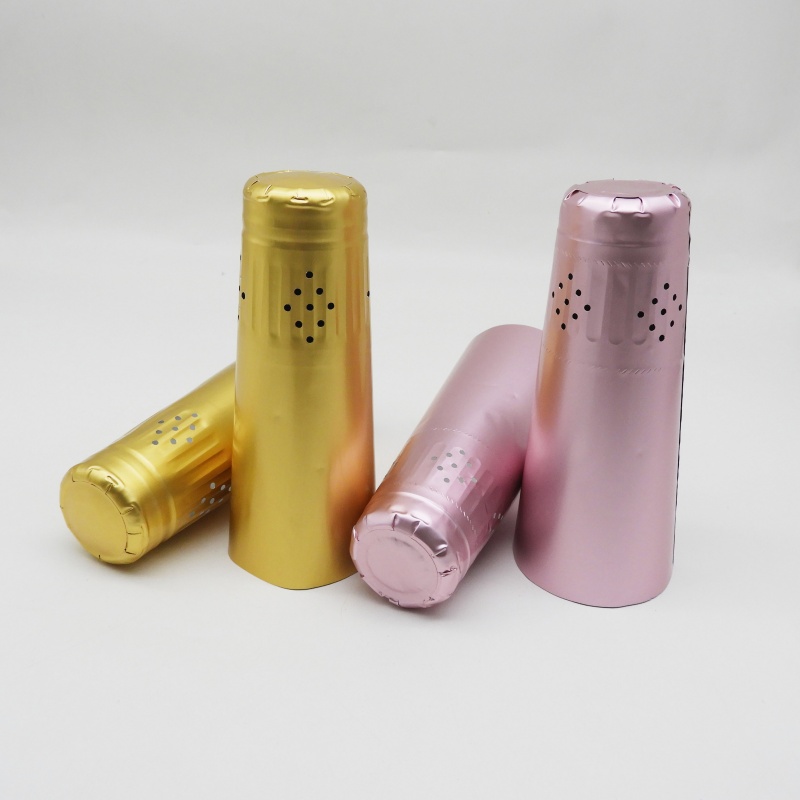
Proper specification requires careful alignment with bottle geometry, branding goals, and crimping process. Begin with neck confirmation. Standard champagne bottles generally accept capsules between 34x115mm and 34x124mm, depending on wire hood height and shoulder profile. Forwarding a physical sample or technical drawing allows precise fit assessment, preventing loose crimps or oversized skirt material.
Finish preferences follow. Smooth foils produce a contemporary clean effect; pleated or hand-crimped styles deliver heritage texture. Foil thickness typically ranges from 30 to 40 microns to balance durability with ease of manipulation during crimping. Top disk configurations—solid, breather-vented, or embossed—contribute functional or decorative value.
Customization shapes competitive positioning. Embossing creates raised logos or motifs that interact with light and provide tactile depth. Hot stamping applies sharp metallic text or details. Custom colors—gold, silver, rose tones, matte black—support unified branding. Samples in proposed shades under intended lighting conditions confirm final appearance.
Performance evaluation stays critical. Capsules must crimp uniformly without rupture, resist oxidation in storage, and retain luster after application. Food-grade compliance covers broad beverage use. Suppliers offering fit assurances and swift sample production substantially reduce uncertainty.
The table below outlines the principal factors from repeated bottling experience:
| Factor | Why It Remains Critical in 2026 | Prevailing Practical Benchmark | Typical Issues & Field Remedies |
| Size & Neck Fit | Secures clean crimp over wire hood | 34×115–34x124mm standard; adjust for magnum/piccolo | Provide bottle sample for confirmation |
| Finish Style | Defines aesthetic character | Hand-crimp/pleated for craft; smooth for modern | Conduct crimping trials on samples |
| Customization | Drives brand differentiation | Embossing/hot stamping/logos/custom colors | Review proofs before full production |
| Material Durability | Preserves appearance and function | 30–40μm foil, food-grade, oxidation-resistant | Maintain cool, dry storage conditions |
| Crimping Method | Aligns with production scale | Manual tools for low volumes; semi-auto compatible | Practice crimping on representative bottles |
| Supplier Transparency | Reduces delivery and quality risk | Clear MOQ disclosure, rapid sampling, fit support | Avoid sources with concealed minimums above 10k |
Preliminary crimping tests—applying a limited number of capsules to actual bottles—expose adjustments required before advancing.
Observed Outcomes in Small Sparkling Production
A coastal winery completed 2,000 cases of a new vintage sparkling rosé with custom rose-gold capsules featuring a subtle embossed logo on the disk. Low MOQ enabled a deliberate initial quantity without excess. Resulting shelf and digital imagery elevated perceived quality, supporting stronger direct-channel reorders.
A regional producer released 1,800 bottles of seasonal prosecco using metallic silver capsules with understated hot-stamped text. Hand-pleated finish contributed crafted texture, and the refined appearance facilitated acceptance into nearby retail accounts.
An emerging cava operation exported small-lot brut selections fitted with matte black capsules displaying gold embossing. Reduced starting volumes eased initial market entry, while consistent supply permitted expansion as interest solidified.
Recurring patterns emerge: low MOQ custom aluminum foil champagne capsules eliminate early barriers, refocusing effort on product integrity and positioning strategy.
Yantai Original: A Reliable Partner for Flexible Packaging Solutions
Yantai Original Package Co., Ltd., established in 2017 and located in Yantai, Shandong Province, accumulates eight years of focused experience in bottle cap exports. The company integrates manufacturing and trading to provide complete packaging support, encompassing aluminium caps, glass bottles, and carton secondary packaging. Positioning near Qingdao Port enables dependable global delivery via sea, rail, or air.
Adaptable MOQ policies distinguish the operation, serving startups and mid-level producers needing custom features—logos, embossing, colors—in measured quantities. Automated lines sustain production uniformity, while engineering staff perform fit validation through comprehensive dimensional checks and sample trials. The coordinated approach removes component mismatches, assuring reliable sealing for sparkling wine, champagne, and associated beverage applications.
Conclusion
Custom aluminum foil champagne capsules combined with low MOQ options furnish small sparkling wineries and craft producers a realistic means to achieve polished, individualized packaging in 2026. They balance traditional metallic appeal, tamper-evident security, and customization scope with the flexibility demanded by limited production. As boutique positioning and direct-to-consumer channels expand, suppliers that emphasize adaptable quantities and technical precision sustain consistent professional results throughout sparkling categories.
Frequently Asked Questions
What is the lowest MOQ for custom aluminum foil champagne capsules?
Standard suppliers often require 10,000 pieces or greater for customized runs, while flexible arrangements start in the low thousands. This range suits small wineries or craft producers executing limited sparkling bottlings without significant inventory burden.
How do I hand-crimp aluminum foil champagne capsules for small batches?
Place the capsule over the wire hood, crimp downward evenly with a hand tool or pliers, then pleat or smooth the skirt for consistent appearance. Conduct practice crimps on sample bottles to refine technique and avoid tearing.
What sizes do aluminum foil champagne capsules come in?
Common sizes span 34x115mm to 34x124mm for standard 750ml bottles, with adjustments available for magnum or piccolo formats. Verify fit by measuring neck and wire hood dimensions.
Can I get embossed logos on low MOQ champagne foils?
Yes, suppliers with adaptable policies offer embossing and hot stamping on orders beginning in the low thousands. Provide artwork early for proof approval and sample confirmation.
Are recycled aluminum champagne capsules available in 2026?
Certain formulations integrate recycled aluminum while maintaining crimp performance and appearance. Inquire with suppliers to identify eco-friendly options that align with sustainability targets.


