


Aluminum foil champagne capsules stay essential in sparkling wine lines for closing off the neck securely while giving bottles that refined, consistent shelf appearance that trade buyers expect without question. The laminated foil contracts cleanly with targeted heat, molding tightly to the contours and enclosing the cork along with the muselet fully. On the production floor, mastering the process eliminates frequent distributor returns over visible wrinkles, uneven pull-down, or incomplete seals that undermine product positioning in competitive placements.
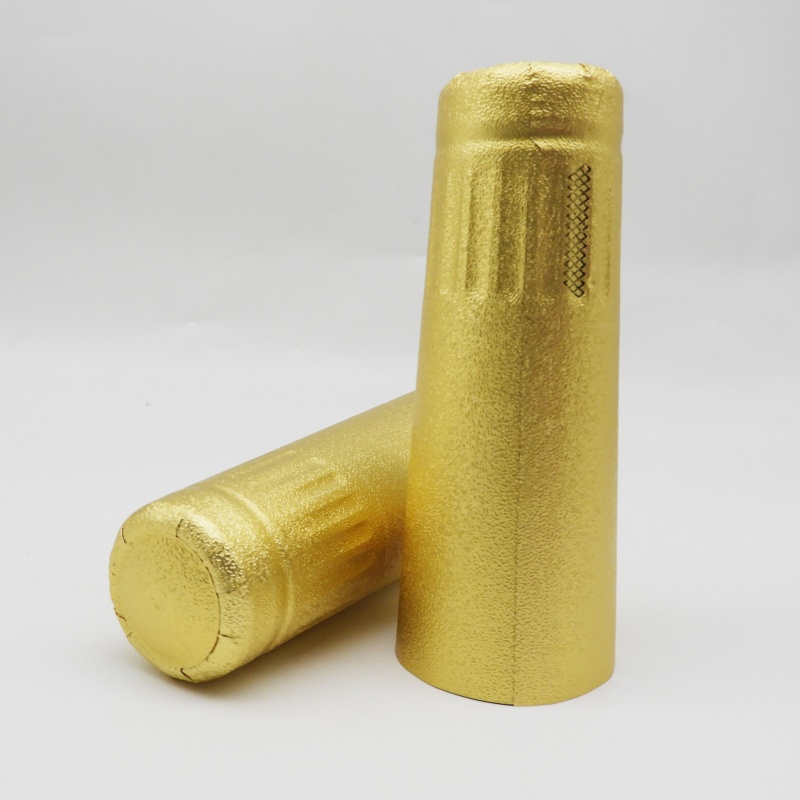
Mid-range sparkling programs and scaling craft producers often run batches from several hundred to a few thousand bottles without dedicated capsule-spinning machinery. Techniques refined through repeated bottling cycles concentrate on heat-shrink aluminum foil capsules engineered for typical sparkling wine formats. The focus remains delivering uniform, transport-stable finishes that hold during warehousing and distribution.
Understanding Aluminum Foil Champagne Capsules for Sparkling Wine
Aluminum foil champagne capsules progressed from mere ornamental hoods to critical packaging layers that deliver tamper indication and meaningful light exclusion. Multi-layer construction incorporates a responsive shrink film that activates precisely under heat, pulling the material smoothly over the neck, drip ring prominence, and shoulder curve standard on Champagne-profile bottles.
In cellar and warehouse experience, these capsules block UV effectively, supporting carbonation retention and aroma stability across months or years on shelf. Routine checks show quality aluminum foil versions maintaining form and tension for five years plus in controlled conditions, free from edge lift or discoloration. Typical sizing at 34mm diameter by 120mm length aligns with 29–30mm top finishes on 750ml bottles, with extended options available for magnums or special formats.
Customization possibilities include subdued matte surfaces, detailed embossed branding, multi-pass color printing, and dependable scored tear strips that operate cleanly post-shrink. Heat-shrink aluminum foil champagne capsules surpass traditional crimp foils in moderate-volume settings by requiring minimal manual forming and adapting reliably to minor bottle tolerances.
Producers in regions like Sonoma, Marlborough, or growing Asian sparkling areas routinely select aluminum foil capsules for their favorable cost-to-appearance ratio. Moderate heat suffices for contraction, reducing operator time compared to rigid tin capsules demanding precise mechanical pleating or spinning.
Recent material refinements enhanced contraction consistency and allowed gauge reductions while preserving durability, benefiting freight costs on export shipments.
Why Proper Application Matters for Professional Results
Bottles leaving the line with flawless, taut capsules project the level of execution that influences buyer decisions at first glance. Trade observations and packaging feedback consistently link surface irregularities—lower wrinkles, trapped voids, or asymmetrical shrinkage—to reduced perceived value and slower turnover.
Distribution partners flag non-conforming capsules for rework or allowance claims. Primary culprits include patchy heat application, reversed shrink sequence, or dimensional mismatches. With internal pressures routinely hitting 5–6 bars in sparkling wine, marginal contact zones can propagate issues from vibration in transit or ambient fluctuations.
Procurement decisions favoring capsules with stable 40–60% shrink performance and accurate perforations yield immediate reductions in post-bottling adjustments. Quality-tracking operations regularly document defect drops from 10–15% to 1–2% range once standardized laminated aluminum foil champagne capsules pair with controlled routines.
Secure capsules also bolster overall closure reliability, decreasing chances of gradual pressure bleed that impacts bottle-fermented or tank-method products during maturation.
Tools and Materials Needed for Application
Typical winery inventories already include most necessities, supplemented by low-cost additions from standard suppliers.
Adjustable heat guns set between 200–300°F offer dependable control for even contraction. Substitutes such as high-wattage hair dryers or kettle steam perform acceptably, although they require greater attention to avoid localized overheating.
Gloves rated for heat protect hands across extended shifts. Workbenches with cradles or non-skid pads maintain bottle stability. Capsules consist of fresh aluminum foil champagne capsules specified for sparkling necks, best vetted in small samples for registration and lamination quality.
Larger daily outputs gain from simple manual turntables or adjustable holders that allow one-handed heat manipulation. Capsules stored in sealed containers or low-humidity zones retain optimal shrink response.
Supplementary items like lint-free cloths for smoothing and focused lighting aid immediate inspections after each application.
Step-by-Step Guide to Applying Aluminum Foil Champagne Capsules
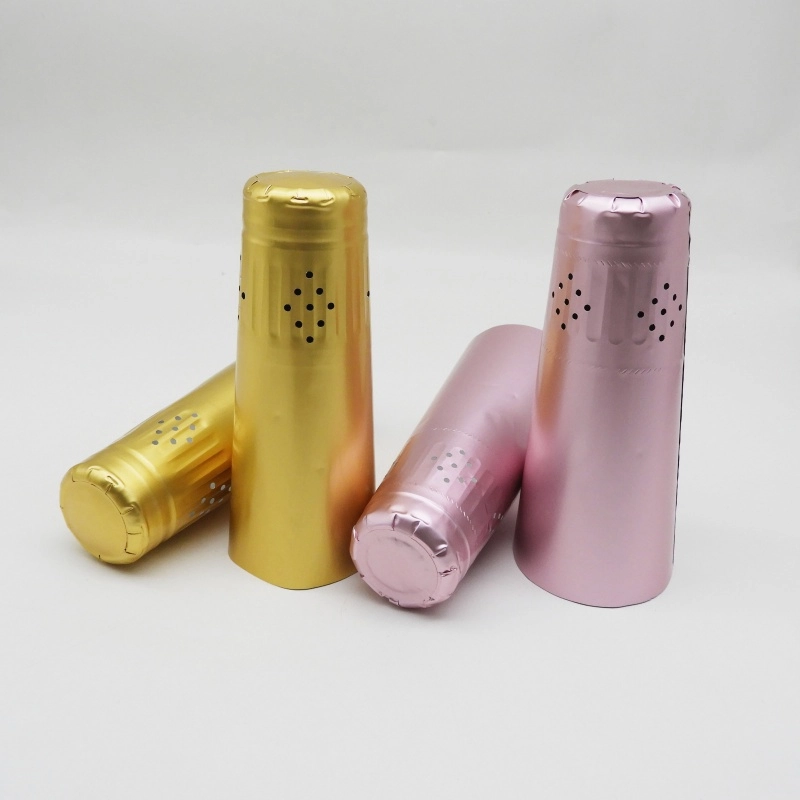
Step 1: Prepare the Bottles and Capsules
Proceed with bottles fully corked, muselet secured, and labeled, necks free from moisture, residue, or adhesive traces. Dry glass maximizes bonding.
Unpack capsules cautiously to sidestep initial creases. Draw samples from each incoming lot to inspect for defects in foil integrity, print offset, or layer separation—early detection avoids production interruptions.
Step 2: Position the Capsule Correctly
Place the capsule over the closure and slide downward until the base edge aligns just under the drip ring. Excessive height leaves exposed glass; insufficient depth causes material accumulation at the shoulder.
Adjust rotation to position tear perforations facing the primary label side, meeting standard consumer expectations for easy access.
Step 3: Apply Heat Evenly for Shrinkage
Heat delivery dictates final uniformity. Position the source 4–6 inches distant at a moderate angle, executing continuous circular passes commencing at the top around the cork area. Stabilize that zone initially before descending gradually.
Constant motion distributes temperature—generally 10–15 seconds per section achieves full draw. Steam application positions the neck over steady vapor with slow rotation for 20–30 seconds until complete tightening.
A clear tension snap and consistent sheen indicate success, absent any slack patches or inclusions.
Step 4: Smooth and Inspect the Finished Capsule
With residual warmth present, lightly stroke the surface using a gloved hand or cloth to resolve minor residual lines. Strategic lighting highlights overlooked imperfections promptly.
Isolate bottles with anomalies for corrective reheating—most respond to brief, localized attention.
Step 5: Allow Cooling and Final Quality Check
Allow 10–15 minutes cooling undisturbed to fix the contracted form against handling distortion. Conduct closing evaluation encompassing full encapsulation, surface flatness, branding alignment, and tear functionality.
Standardized checklists—scoring coverage, smoothness, and positioning—maintain throughput quality and curb subsequent complaints.
Common Mistakes and How to Avoid Them
Hastened heat sweeps produce overly contracted tops with relaxed bases. Address through measured, uninterrupted rotations from crown downward.
Prolonged stationary exposure scorches or melts laminate. Trial runs on test bottles and perpetual movement mitigate this.
Off-axis initial seating results in crooked finals. Verify placement depth on batch starters.
Lingering dampness or label overlap disrupts adhesion. Mandatory drying precedes capsule placement.
Rapid heating on pressurized contents risks slight muselet shift—tempered application prevents displacement.
Lower workshop temperatures delay response; pre-warming capsules compensates readily.
Tips for Achieving Consistent Professional Results in Production
Structure runs into 50–100 bottle increments to sustain workflow momentum and limit fatigue. Regular tool calibration detects variances affecting repeatability.
Capsule storage in conditioned, sealed environments preserves performance traits. Branded lots require orientation verification prior to shrinking for accurate logo placement.
Increasing throughput justifies investment in rotating aids or compact heat enclosures that uphold standards while boosting capacity.
Recording effective parameters per capsule type and bottle profile accumulates practical reference for subsequent operations.
Advantages of Using High-Quality Aluminum Foil Capsules
Dependable shrinkage slashes scrap volumes and rework hours. Enhanced aluminum opacity outperforms many substitutes in light protection, prolonging display viability.
Bespoke detailing—embossed depth, metallic sheen, color fidelity—distinguishes brands and sustains elevated pricing. Structural resilience endures stacking stresses, mechanical handling, and extended transit with few incident reports.
Thinner yet robust gauges combined with recyclable aluminum content address sustainability pressures in international supply chains.
About Yantai Original
Yantai Original accumulates more than eight years dedicated to exporting bottle closures, encompassing aluminum varieties, aluminum-plastic hybrids, plastic designs, and metal alternatives. Manufacturing accommodates smaller runs with extensive customization for logos and patterns aligned to client development phases. Integrated offerings—aligning caps precisely with bottle specifications—eliminate mismatch risks and secure sealing consistency. Guiding principles emphasize service focus, straightforward dealings, and reciprocal growth, underpinned by comprehensive design-to-delivery processes, ongoing innovation, and adherence to environmental benchmarks.
Conclusion
Perfecting aluminum foil champagne capsules application raises standard sparkling wine packaging to levels that compete confidently in premium segments. Methodical positioning, balanced heating, and thorough verification generate finishes conveying dependability across channels. Outlined procedures flex across volumes from limited artisanal to growing commercial, fortifying brand presence via consistent visual and protective excellence.
FAQs
How do I shrink aluminum foil champagne capsules without a heat gun?
Steam from a boiling kettle spout or a high-heat hair dryer handles the job effectively. Rotate the bottle slowly over steam for 20–30 seconds or circle with the dryer from 4–6 inches away until the foil pulls down tight and smooth.
Why do aluminum foil champagne capsules wrinkle on sparkling wine bottles after heat application?
Uneven heat flow usually causes it—start at the top and work steadily downward while rotating the bottle constantly. Holding the heat source too close or stationary in one spot also creates localized over-shrink and creases.
What neck finish size fits standard aluminum foil champagne capsules for sparkling wine?
The common 34mm x 120mm capsules suit Champagne-style necks measuring 29–30mm at the top. Confirm bottle specs before committing to bulk orders to avoid fit problems.
How can I tell if my aluminum foil champagne capsule application is professional enough for wholesale?
Look for complete, wrinkle-free coverage with no air pockets, centered printing or logos, and a taut feel when tapped. Functional tear tabs and even adhesion around the drip ring and shoulder signal ready-for-shelf quality.
Do properly applied aluminum foil champagne capsules protect sparkling wine over long storage?
Yes, they hold up well for five years or longer in typical conditions, providing solid light barrier and helping maintain internal pressure and freshness without lifting or degrading.


