


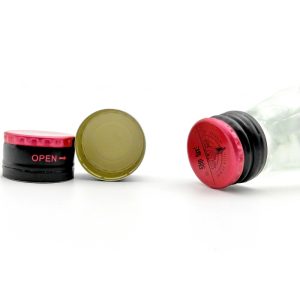
In packaging discussions, bottle caps are often treated as a given—something selected late in the process, sometimes even after labels and cartons are finalized. Yet in real production environments, closures are rarely passive components. They fail, they leak, they jam filling lines, and occasionally, they quietly cost brands money long after a product has shipped.
Anyone who has handled beverages or spirits at scale knows this. The cap may be small, but its influence is not.
This guide looks at bottle caps from a manufacturing and application standpoint. Not from a marketing angle, and not as a catalogue of options, but as a working component that has to survive logistics, storage, consumer handling, and regulatory inspection.
Why Bottle Caps Are Evaluated Differently in Real Production
On paper, most bottle caps look similar. Dimensions are listed, materials are specified, and compatibility is assumed. In practice, the difference between a cap that “fits” and one that performs shows up only after weeks of transit or months on a shelf.
A closure that opens smoothly in the factory may tighten after temperature changes. A liner that seals perfectly on a still liquid can behave very differently once carbonation or alcohol is involved. These are not rare problems. They are common enough that experienced buyers usually assess bottle caps less by appearance and more by how forgiving they are under imperfect conditions.
In other words, the question is rarely “Does this cap work?” but rather “How much margin for error does it allow?”
Understanding Bottle Cap Types Through Use, Not Theory
Screw-Based Closures and ROPP Designs
Most beverage and spirits packaging today relies on screw-style closures. Among them, roll-on pilfer-proof designs have become standard across many markets. Their popularity has less to do with tradition and more to do with consistency.
ROPP caps are formed directly onto the bottle neck during application. That process compensates for small variations in glass finishes, which is one reason they are widely used for export-oriented products. Tamper evidence is built in, and the opening experience is predictable, even after long storage.
From a manufacturing perspective, these designs tend to be easier to control on high-speed lines than many alternatives.
Caps Chosen for Specific Products, Not Categories
Some closures only make sense when the product demands them. Lug-style designs, for example, remain common in food packaging where vacuum sealing is part of the process. Specialty caps—taller profiles, textured tops, or decorative embossing—are often chosen not because they are necessary, but because the product story calls for them.
In those cases, performance still matters, but the decision starts with positioning rather than efficiency.
Materials: Where Performance Often Overrides Cost
Aluminum as a Practical Standard
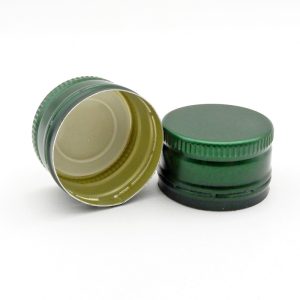
Aluminum has earned its place as the dominant material for many bottle caps not because it is trendy, but because it behaves well across different conditions. It resists corrosion, holds shape under pressure, and accepts a wide range of surface treatments.
For spirits and wine, aluminum closures paired with the right liner tend to age predictably. That predictability is valuable. It reduces surprises once products are already in distribution.
Plastic and the Trade-Offs Involved
Plastic closures still serve a purpose, particularly in high-volume or price-sensitive segments. But they often come with compromises—less tactile feedback, fewer decoration options, and a perception that may not align with premium positioning.
Material choice, in practice, is less about preference and more about what the product can tolerate without creating downstream issues.
How Application Dictates Closure Decisions
A bottle cap that works for water may fail quickly on a carbonated drink. A closure that performs well with low-alcohol beverages may struggle once proof levels rise. These differences are not subtle, and they are usually tied to liner structure rather than the shell itself.
Manufacturers who work closely with customers tend to start by asking about the liquid, not the logo. Pressure, acidity, filling temperature, and expected shelf life all influence which combination will hold up over time.
Ignoring these factors often leads to reactive fixes later—new liners, secondary sealing, or worst-case recalls.
Custom Bottle Caps Without Overengineering
Customization has become more accessible, but it is still easy to overdo it. A custom bottle cap should serve a purpose beyond decoration. Sometimes that purpose is differentiation. Other times it is tactile feedback or easier grip.
Modern printing methods allow complex graphics, gradients, and metallic effects. Embossing adds a physical element that customers notice instinctively. Yet none of this matters if the cap introduces variability on the line or complicates sourcing.
The most effective custom solutions tend to be restrained. They look intentional, not experimental.
What Bottle Cap Manufacturers Actually Control
From the outside, it is tempting to judge manufacturers by catalogue size or daily output. Internally, quality often comes down to how rigorously they test and verify.
Torque testing, seal integrity checks, and liner adhesion tests are standard in well-run operations. More telling, however, is whether the manufacturer verifies the fit between the cap and the bottle rather than assuming nominal compatibility.
Many leakage issues traced in the field originate from tolerance mismatches between components sourced separately. That problem disappears when fit is validated before production rather than after complaints arise.
Selecting Manufacturing Partners With Fewer Assumptions
Choosing among bottle cap manufacturers is rarely about finding the lowest price. It is about finding a partner willing to ask uncomfortable questions early.
Suppliers who request bottle drawings or physical samples, discuss liner options openly, and adjust production for non-standard orders tend to be easier to work with over time. Flexibility around order volume also matters, especially for brands managing multiple SKUs or seasonal releases.
Rigid systems look efficient until something changes.
A Practical Note on Yantai Original
Within this context, Yantai Original operates less like a catalog-driven supplier and more like a technical packaging partner. Since 2017, the company has focused on integrating aluminum closure production with bottle and secondary packaging support, reducing the coordination gaps that often appear when components come from multiple sources.
Their process emphasizes dimensional verification before production and flexible order structures that accommodate both trial runs and scaled programs. For brands navigating growth without wanting to overcommit inventory, this approach tends to reduce friction rather than add it.
Conclusion
Bottle caps rarely attract attention when they work, and they draw immediate scrutiny when they do not. That imbalance explains why experienced operators treat closures cautiously, even when the rest of the package seems straightforward.
Understanding how cap types, materials, and manufacturing choices interact with real products allows brands to avoid problems that never appear in specifications. In packaging, reliability is rarely accidental—it is usually designed in early or paid for later.
FAQs
How do most issues with bottle caps actually start?
More often than not, problems begin with assumptions. Assuming a cap will fit because the size sounds right, or assuming a liner will behave the same across different liquids. Small mismatches tend to surface only after shipping or storage.
Is customization worth it if volumes are not huge?
It can be, provided the customization serves a clear purpose. Visual differentiation or tactile cues can justify custom bottle caps, but only if they do not complicate filling or sourcing.
Why do some caps leak even when they look fine?
Leakage is usually tied to liner performance or dimensional tolerance rather than visible defects. A cap can appear perfect and still fail under pressure or temperature change.
Should caps and bottles come from the same supplier?
Not always, but compatibility must be verified. When bottle caps and bottles are developed or tested together, the risk of mismatch drops significantly.
What matters more than brand when choosing a cap supplier?
Responsiveness and technical clarity. A manufacturer that explains limitations upfront often prevents issues that branding alone cannot solve.


