


Aluminum bottle caps are rarely discussed early in a packaging project.
They usually appear near the end, once the bottle shape is fixed, the label approved, and the filling line already chosen.
That timing causes problems.
Because by the time caps are selected, most teams are already locked into decisions that quietly limit what the closure can realistically do. When sealing issues show up later, or when torque consistency becomes unstable across shipments, the cap suddenly matters more than anyone expected.
This article does not try to catalogue every option. It looks at how aluminum caps behave in real production settings, why certain choices work better than others, and where teams tend to underestimate risk.
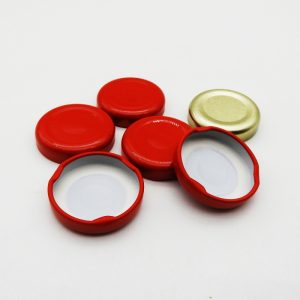
Why Caps Become a Problem Only After Launch
Most failures linked to caps do not show up during testing.
They show up in distribution.
A shipment arrives after weeks in transit. Some bottles open too easily. Others require more force than planned. A few show minor leakage. Nothing dramatic, but enough to raise questions.
At that point, attention turns to the cap. Not because it was wrong, but because it was chosen too late to shape the system around it.
Closures are small components, but they sit at the intersection of sealing, user experience, and line stability. Aluminum happens to handle that intersection better than many alternatives, which explains why it keeps showing up across industries that care about consistency.
Different Aluminum Cap Types, Seen From the Line
Screw-On Caps
Threaded aluminum caps feel straightforward. They usually are.
They reseal well. Operators understand them. Consumers don’t need instructions. On automated lines, they behave predictably as long as bottle finishes stay within tolerance.
Their limitation appears when conditions change. Variations in glass finish or liner compression can affect torque more than teams expect. When that happens, the cap itself is not the problem. The system around it is.
Tamper-Evident Designs
Tamper evidence is rarely questioned during specification. Everyone agrees it’s necessary.
Where things get complicated is execution. Tear bands that release unevenly, bridges that break too early, or caps that look intact but aren’t. These issues don’t come from design intent. They come from how aluminum interacts with tooling, speed, and liner choice.
In regulated categories, these small inconsistencies matter.
Roll-On Applications
Roll-on aluminum caps behave differently because they are formed during application.
When bottle finish quality is high, results are excellent. Sealing is tight. Visual appearance is clean. Variability stays low.
When finish variation creeps in, performance degrades quietly. The cap still closes, but torque spread widens. Over time, that inconsistency shows up downstream.
Where Aluminum Caps Keep Showing Up, For a Reason
Beverages
Carbonation changes everything.
Pressure retention, gas loss, and transport vibration all stress the closure. Aluminum holds shape under those conditions better than many materials. It does not flex much. That rigidity helps maintain internal pressure, especially during long-distance shipping.
Spirits
High alcohol content exposes weaknesses in materials fast.
Aluminum does not react. Liners do the work, but the shell stays stable. That stability matters when bottles sit in warehouses for months before sale.
Brand teams also care about how the cap feels when opened. Aluminum delivers a controlled, predictable breakaway that many other options struggle to match.
Food and Condiments
Here the issue is not pressure. It is environment.
Humidity, temperature swings, and repeated handling all add stress. Aluminum resists corrosion and keeps sealing behavior consistent even when storage conditions are less than ideal.
That reliability is why it continues to be specified in export-heavy categories.
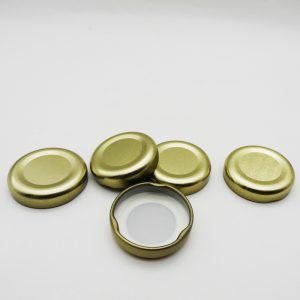
Benefits That Actually Matter After Year One
Sealing performance is the obvious one, but it is not the only benefit that counts.
Aluminum maintains dimensional stability over time. That matters more than initial appearance. A cap that looks perfect on day one but drifts after months in storage creates cost that never shows up on a spec sheet.
Weight also matters, not in isolation, but at scale. Across millions of units, small reductions affect freight, handling, and fatigue on the line.
Sustainability enters the conversation later, often from brand or regulatory pressure. Aluminum’s recyclability helps close that loop without changing the rest of the system.
How Teams Actually Choose the Right Cap
This is where most articles get abstract.
This one won’t.
Selection usually starts with the liquid. Carbonated or still. Alcoholic or not. Viscous or thin. That narrows liner options immediately.
Then comes the bottle finish. Not just nominal dimensions, but real-world variation. This is where many teams rely on assumptions instead of measurements.
After that, production speed matters. Some caps tolerate variation better at lower speeds. Others need tighter control to behave well at scale.
Customization comes last. Not first. When it comes first, problems follow.
Manufacturing and Application: Enough to Know, Not Everything
Caps behave differently depending on tooling, speed, and liner placement.
That is not something most buyers want to manage daily. They want predictability. Aluminum supports that when matched correctly to the line.
Quality checks tend to focus on torque and visual defects. The more important checks are often trend-based. Drift over time tells more than any single measurement.
Where the Market Is Quietly Moving
Packaging teams are under pressure to reduce complexity.
Fewer SKUs. Fewer suppliers. More systems that work across product lines. Aluminum caps fit that direction because they adapt without constant redesign.
Customization remains important, but it is becoming more restrained. Function first. Decoration second.
Where Yantai Original Fits Into This Picture
Teams that work with aluminum caps long enough start to care less about novelty and more about repeatability.
Yantai Original operates in that space. Not as a concept-driven supplier, but as one focused on stable specifications and coordination between components. Caps, bottles, and secondary packaging are treated as one system, not separate purchases.
For buyers managing export markets or multi-line production, that approach reduces friction later.
About Yantai Original
Yantai original Package Co., Ltd is based in Yantai, Shandong, and works across aluminum closures, glass bottles, and supporting packaging components. The company supports beverage, spirits, food, and pharmaceutical customers with an emphasis on consistency rather than one-off solutions.
Its role in projects is often less visible early on, but becomes more relevant as volumes scale and distribution conditions vary.
Conclusion
Aluminum caps do not solve problems on their own.
They work when the surrounding decisions allow them to. When bottle finishes are controlled. When liners are matched to liquids. When application conditions are understood rather than assumed.
Most issues attributed to closures are really system issues. Aluminum simply makes those systems easier to stabilize over time.
FAQs
Why do aluminum caps sometimes show torque variation after shipping?
Usually because variation existed earlier and only became visible under transport stress.
Are aluminum caps suitable for all liquids?
Most, yes. The liner choice usually matters more than the shell.
Is customization worth the added complexity?
It depends. For some brands, yes. For others, stability brings more value.
Why do some roll-on caps perform inconsistently?
Bottle finish variation is often the underlying cause, not the cap itself.
When should caps be selected in a project timeline?
Earlier than most teams expect. That is when they have the most influence.


