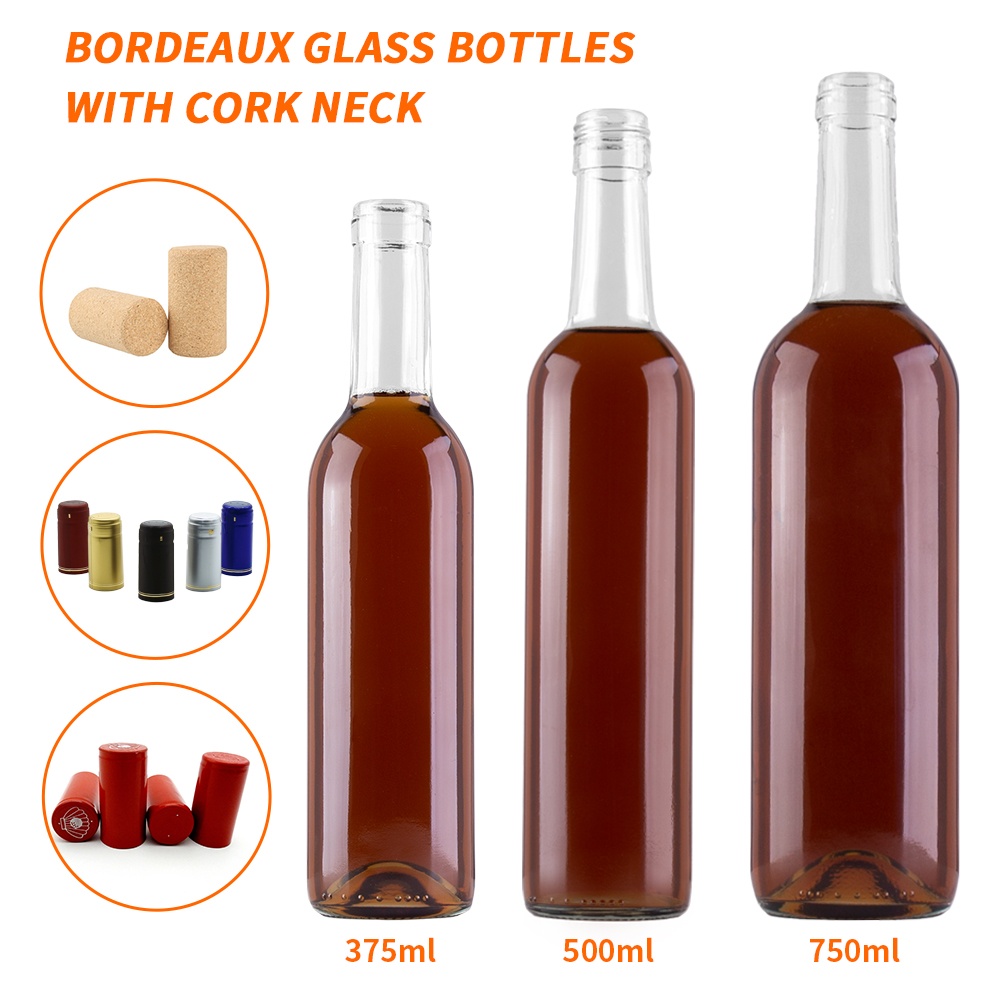


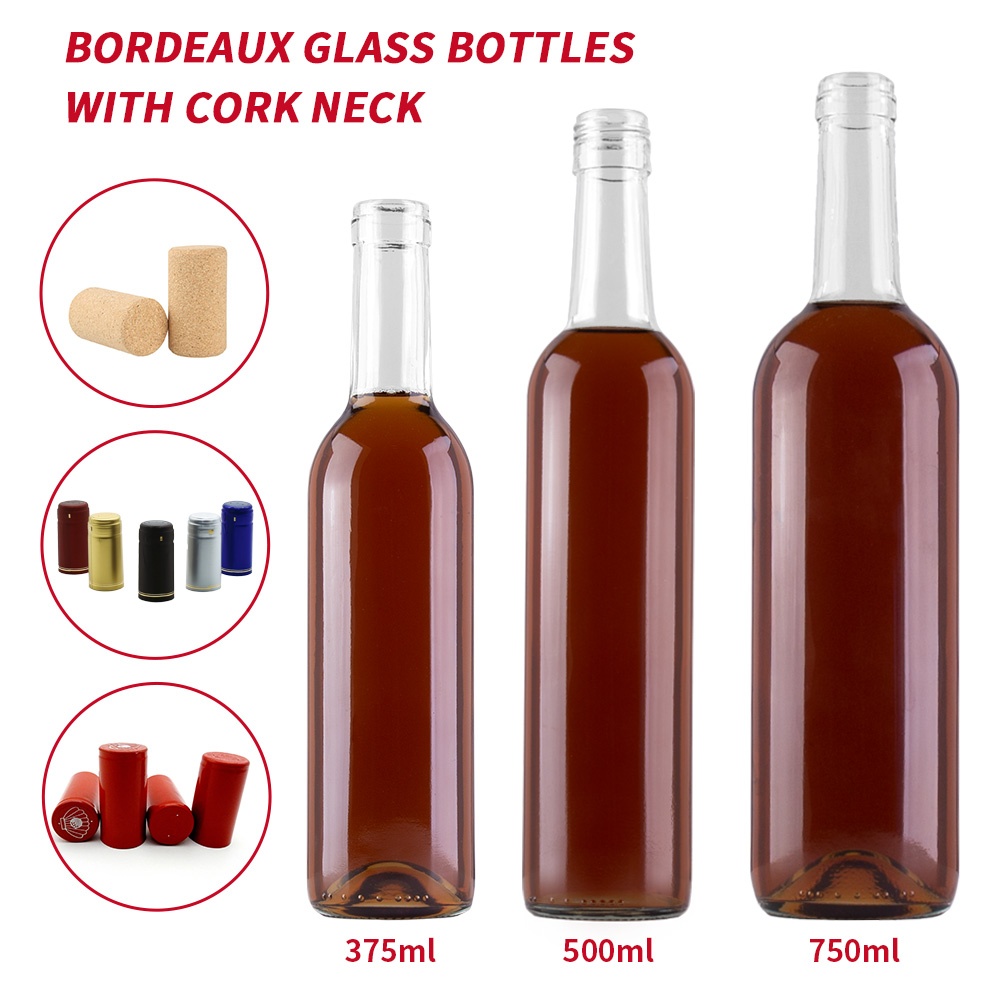
A successful Bordeaux wine bottle order depends on more than choosing a familiar shape. Wineries must make the cork finish, capsule, label, and shipping carton work as one packaging system. For the cork-finish Bordeaux bottle range covered here, the available capacities are 375 ml, 500 ml, and 750 ml in flint or antique green glass, paired with a 30×60 mm PVC capsule. The cork remains the primary closure; the capsule covers and decorates the finished neck.
Before requesting Bordeaux wine bottles, prepare a specification that identifies the filled wine, bottle color, capacity, cork requirements, label dimensions, capsule artwork, packing method, and destination. This checklist helps winery buyers identify the information that should be verified before sampling and mass production.
Which Bordeaux Bottle Details Should Be Confirmed First?
The bottle drawing is the foundation of the project. It should establish the dimensions that affect filling, corking, labeling, packing, and palletization before decorative decisions are finalized.
Capacity and glass color
Confirm whether the project requires 375 ml, 500 ml, or 750 ml bottles and whether each SKU will use flint or antique green glass. Flint glass gives consumers a clear view of the wine and can support rosé, white wine, and display-led packaging. Antique green glass provides more visual screening and a traditional wine presentation. The choice should reflect the wine style, expected light exposure, label design, and storage conditions.
Bottle dimensions and production samples
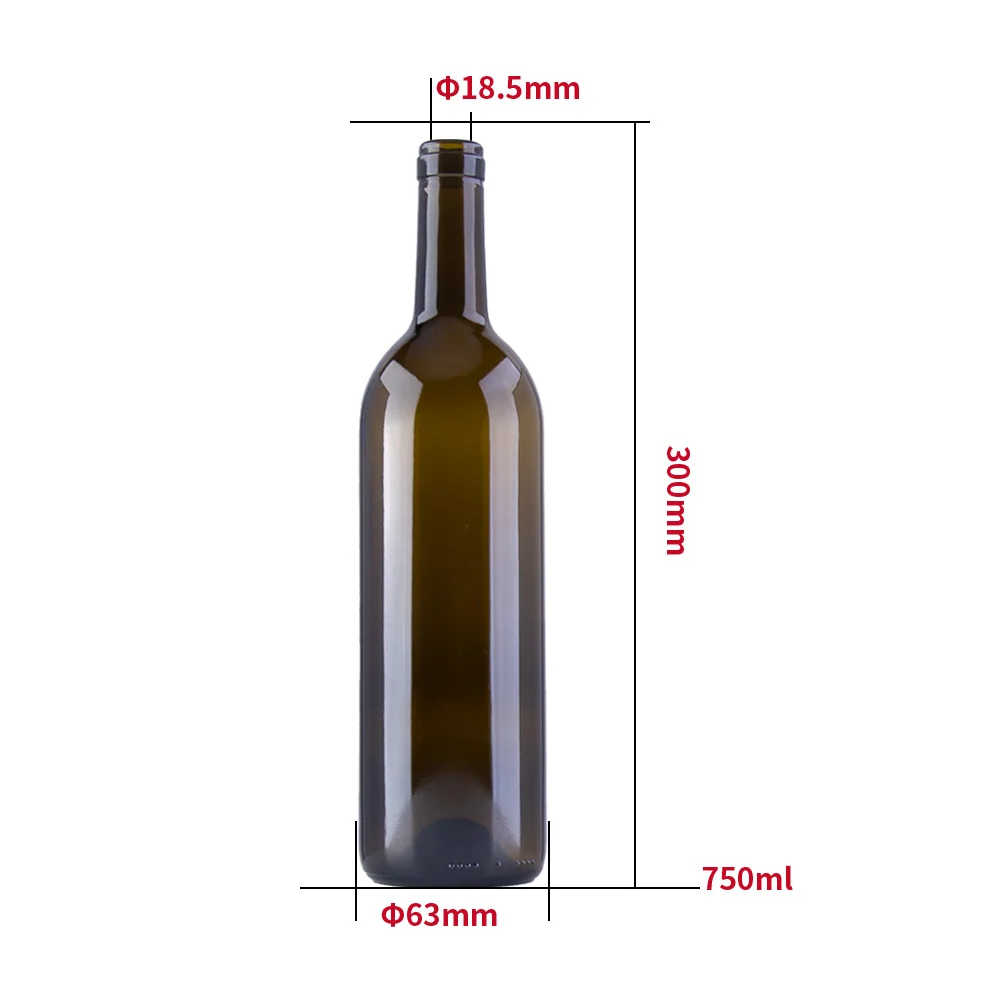
Request a current technical drawing showing the bottle height, body diameter, label panel, neck profile, mouth bore, weight, and brimful capacity. Confirm tolerances rather than relying only on nominal capacity. Samples should be checked on the winery’s filling, corking, labeling, and packing equipment because a bottle that looks correct may still require line adjustments.
How Should the Cork Finish Be Specified?
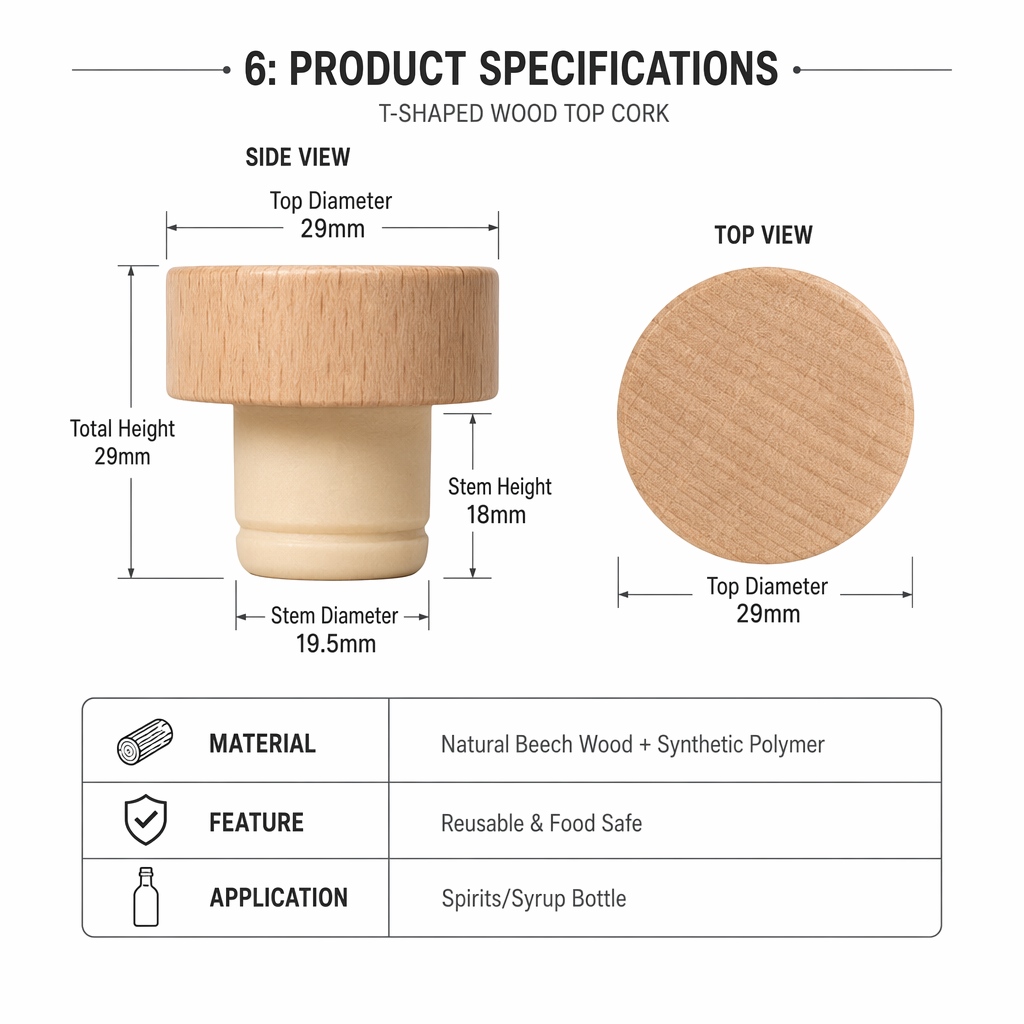
A cork-finish bottle needs a closure selected for the actual internal mouth geometry and intended wine. The words ‘cork finish’ do not establish the cork material, diameter, length, or treatment.
Match the cork to the bottle mouth
Provide the internal mouth diameter, insertion depth, neck drawing, proposed cork specification, and an existing sample when available. The cork must compress sufficiently to create a stable seal without becoming excessively difficult to insert or extract. Natural, technical, and synthetic corks can behave differently, so the final option should be tested with the intended bottle and bottling process rather than assumed from a catalog description.
Validate performance under real conditions
Run trial bottles through the intended corker and check insertion depth, extraction force, visible damage, leakage, and bottle-to-bottle consistency. The winery should also evaluate the closure under its planned storage and distribution conditions. Temperature changes, time, vibration, and bottle orientation can expose problems that are not visible immediately after corking.
What Must Be Checked for a 30×60 mm PVC Capsule?
The catalog pairs the Bordeaux cork-finish bottle with a 30×60 mm PVC capsule. That nominal size is a starting specification, but the final fit must still be tested over the selected cork and actual bottle neck.
Confirm capsule fit and application
The capsule diameter, height, lower-edge position, perforation, and shrink behavior should be confirmed together. An oversized capsule can wrinkle or rotate; an undersized capsule can be difficult to place or may distort after heating. A heat shrink capsule for wine bottles must be applied with suitable equipment and controlled heat. Test the process at realistic line speed before approving bulk production.
Coordinate decoration with the label
Specify the capsule background color, matte or glossy appearance, top emblem, side logo, brand text, and any easy-tear feature. Supply editable AI, EPS, or PDF artwork plus an approved Pantone reference or physical color sample. The capsule should complement the label rather than repeat too much information, and its graphics should remain correctly oriented after application.
How Should Labels Be Prepared for Bordeaux Bottles?
Start with the confirmed label panel from the final bottle drawing. Define front and back label width, height, gap, vertical position, adhesive requirements, substrate, and application method. Do not build artwork from a visual estimate of the bottle. Curvature, mold variation, and the transition near the shoulders can affect label contact and alignment.
Apply sample labels to filled bottles and review them under normal retail lighting. Check edge lift, bubbles, wrinkles, scuffing, barcode readability, and alignment with the capsule. Flint bottles make the wine color part of the design, while antique green bottles change color contrast; both should be reviewed with the actual label stock and print finish.
What Should the Shipping Carton Protect?
The carton specification should be developed from the finished bottle, not the empty glass alone. Bottle diameter, height, filled weight, capsule clearance, dividers, case count, stacking pattern, pallet size, and export route all affect the structure.
Prevent glass contact and closure damage
Choose internal dividers or another separation method that keeps bottles from striking each other during handling and vibration. Allow enough top clearance to protect the cork and capsule without permitting excessive vertical movement. Trial cartons should be packed with filled or weight-simulated bottles and evaluated for compression, movement, abrasion, and label damage.
Align carton markings with the packaging program
Confirm shipping marks, SKU identification, bottle count, orientation symbols, barcode requirements, and custom logo placement. When several capacities or colors share a design family, clear carton identification reduces warehouse and fulfillment errors. Review available carton box options only after the bottle and internal protection requirements are defined.
Why Source the Bottle and Packaging Components Together?
Yantai Original Import and Export Co., Ltd. supplies glass bottles and bottle closures together and supports custom packaging requirements. For wineries, coordinating the Bordeaux bottle, cork specification, capsule, and carton through one technical review can reduce gaps between separate drawings and samples. Final compatibility should still be approved using the winery’s actual wine, components, and production conditions.
What Should Be Included in the RFQ?
A complete RFQ should state the bottle capacity and color, target bottle weight, neck and mouth drawing, wine type, cork material and dimensions, 30×60 mm capsule requirement, artwork, Pantone colors, label panel and label specifications, carton count and divider structure, order quantity, packing method, destination port, and requested samples. Also describe the filling, corking, capsule application, and labeling equipment. Clear inputs make quotations easier to compare and reduce changes after sampling.
Conclusion
A Bordeaux wine bottle packaging project succeeds when every component is approved as part of the same system. Confirm the 375 ml, 500 ml, or 750 ml bottle and its glass color first, then validate the cork against the actual mouth, test the 30×60 mm PVC capsule, size labels from the final drawing, and engineer the carton around the finished pack. A disciplined sample and line-trial process protects seal performance, shelf appearance, and export durability before volume production begins.
FAQs
Does a 30×60 mm PVC capsule seal the wine bottle?
No. The cork is the primary closure. The PVC capsule covers the cork and bottle neck to provide decoration and a finished retail appearance. Its dimensions and application still need to be tested on the actual bottle.
What information is needed to select the cork?
Provide the bottle-mouth internal diameter, insertion depth, neck drawing, wine type, cork material, cork diameter and length, corking method, and any existing samples. Approve the closure only after insertion, extraction, and sealing tests.
Should labels and cartons be approved before bottle samples?
No. Final label dimensions and carton structures should be based on an approved bottle drawing and production-representative samples. This reduces label fit problems, insufficient capsule clearance, and unwanted bottle movement inside the case.