


The 31.5*24mm olive oil bottle cap continues to dominate packaging specs for Dorica and Marasca glass bottles in export and private-label runs. Procurement teams deal with recurring headaches when the closure does not match the neck finish—leaks show up in transit, torque varies across batches, or refilling opens the door to adulteration that hurts brand reputation downstream. B2B buyers weighing non-refillable pop-up cap options against standard pourer caps face a straightforward trade-off: stronger tamper-evident olive oil closure protection versus simpler daily pouring and lower upfront cost. This guide draws from common field experience in bottling lines and shipment claims to outline differences, application fit, and steps to avoid mismatches.
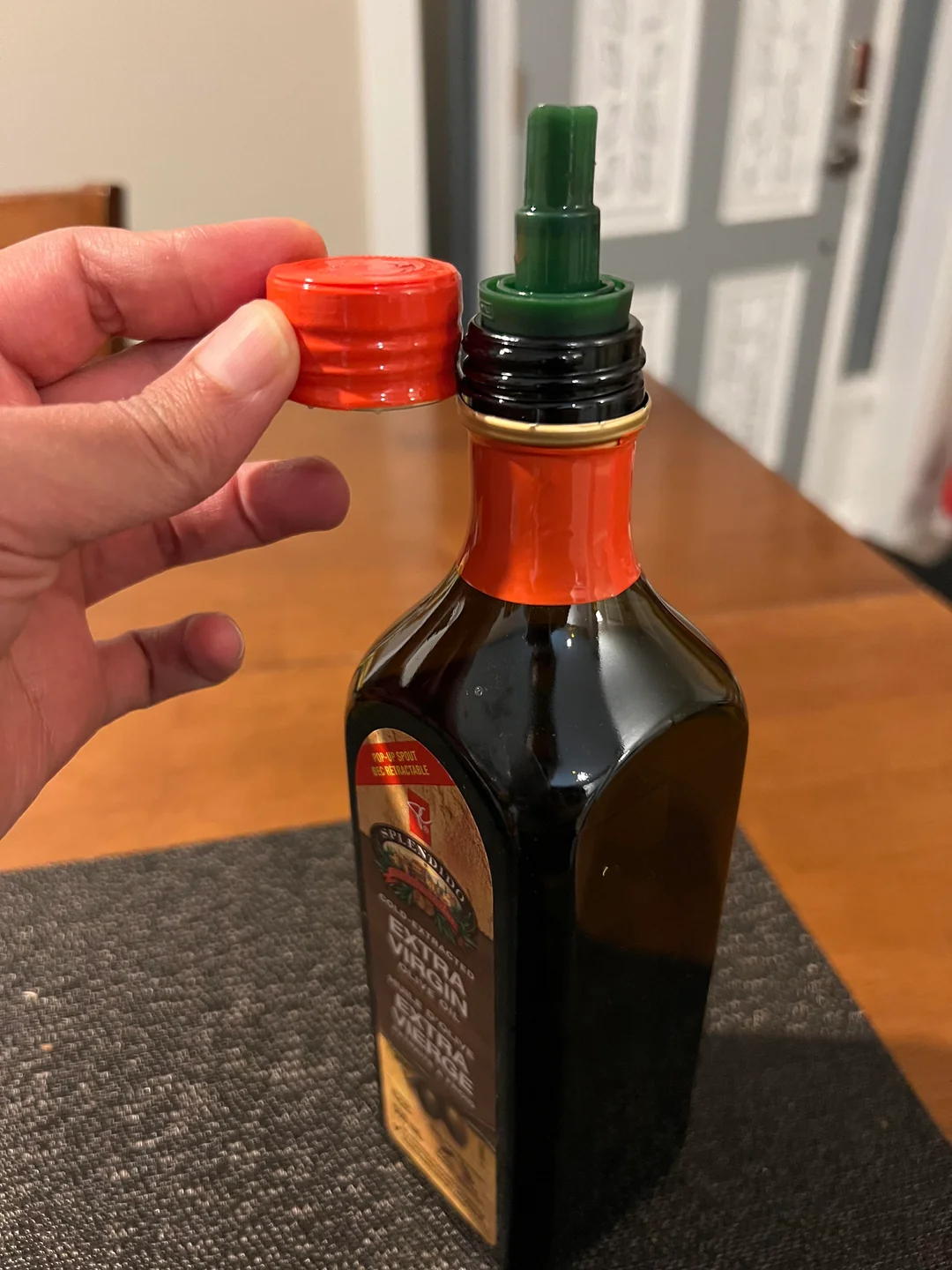
Why 31.5*24mm Remains the Dominant Neck Finish for Olive Oil Bottles
The 31.5*24mm finish prevails because it pairs reliably with the most widely used olive oil glass bottles from 250ml sampling sizes up to 1L family packs. Dorica bottles carry rounded shoulders and straight walls, while Marasca versions taper more sharply, yet both rely on this continuous thread dimension for consistent capping. The outer thread measures 31.5mm across, with 24mm thread height—numbers that align with ROPP application on automated lines without frequent tooling changes.
Market listings show this size accounting for the bulk of olive oil closure inquiries on major sourcing platforms. It handles standard capacities smoothly: 250ml for retail testers, 500ml and 750ml for shelf stock, 1L for foodservice or bulk export. The finish works with aluminum-plastic composites or full plastic builds, giving flexibility based on recyclability targets or budget.
One frequent oversight trips up buyers: skipping precise neck verification. Thread diameter (T), root diameter (E), and height (H) need exact alignment. Glass mold tolerances vary slightly between suppliers, and even minor deviation causes over-torqued caps that crack liners or under-torqued ones that loosen in heat cycles during sea freight. Forwarding a bottle sample or detailed drawing for supplier measurement eliminates most of these risks before production starts.
Non-Refillable Pop-Up Caps vs. Standard Pourer Caps: A Detailed Side-by-Side Comparison
Non-refillable pop-up caps and standard pourer caps address different priorities within the 31.5*24mm olive oil bottle cap category. The former emphasizes security features, the latter focuses on ease.
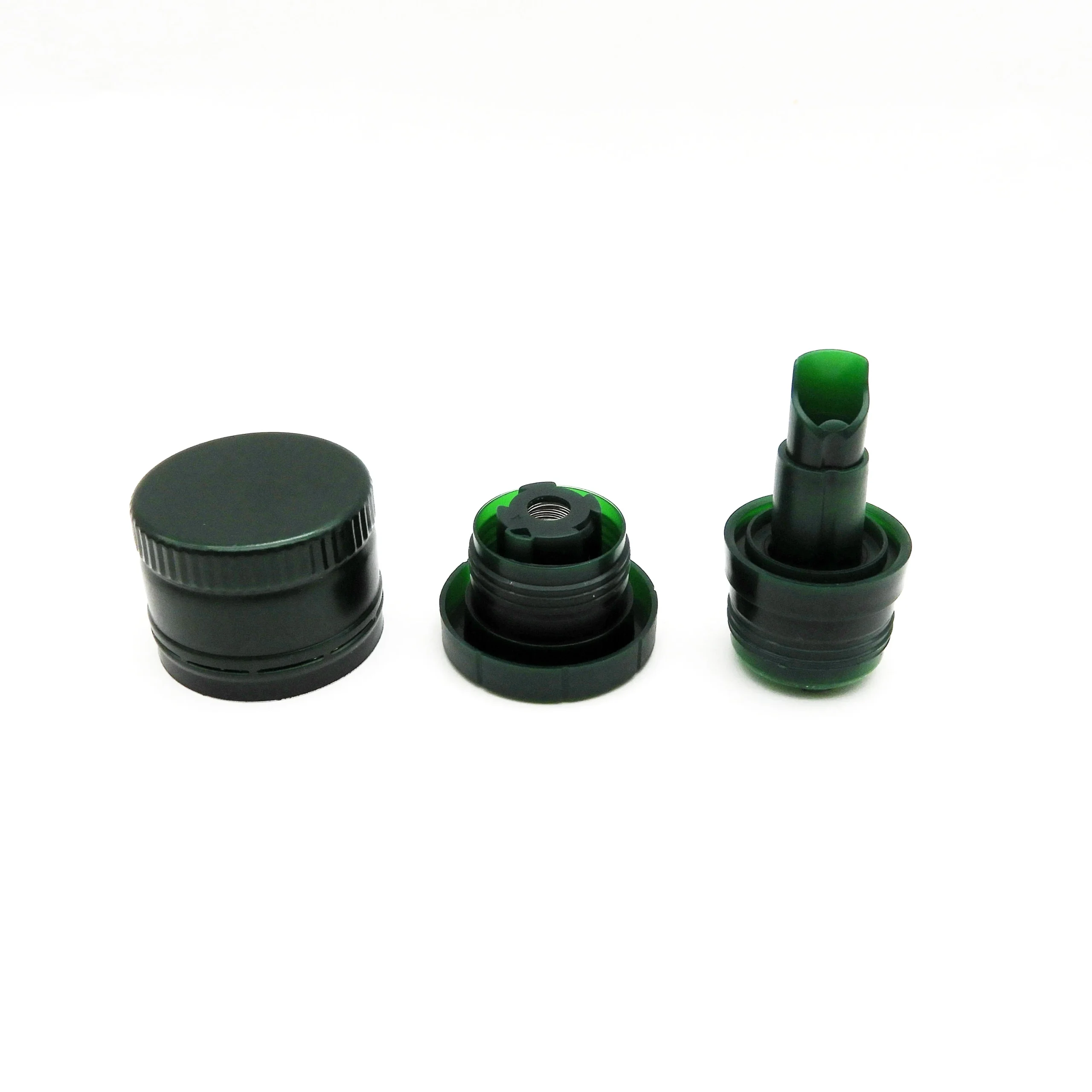
Non-refillable pop-up caps build around an aluminum shell housing a plastic insert with a spring-loaded mechanism. First opening triggers the insert to rise, opening a dispensing channel. An internal valve or labyrinth path permits outward flow under tilt but resists inflow, complicating refilling without clear evidence of interference. Tamper-evident rings typically break away on initial twist for immediate visual confirmation.
Standard pourer caps rely on a fixed or extendable spout molded into the cap body. The emphasis stays on smooth, low-drip dispensing suited to repeated kitchen use. Without the one-way restriction, refilling occurs freely—practical in low-risk retail but a vulnerability in commercial channels.
Practical differences emerge across several dimensions. Non-refillable pop-up caps deliver strong performance in tamper-evident olive oil closure scenarios. The irreversible activation and anti-refill valve block substitution in restaurant settings or during distribution legs. Dispensing remains controlled for viscous extra virgin olive oil, cutting waste from spills while preserving a high-end handling feel.
Standard pourer caps prioritize application simplicity. Lower torque requirements suit manual or semi-auto lines. Everyday pouring flows naturally with drip-control edges that keep surfaces clean—attributes that appeal to home-market private labels.
Cost reflects structural complexity. Non-refillable designs involve additional components for the spring and valve, pushing unit price higher, though suppliers with flexible minimums keep entry barriers reasonable. Pourer caps scale down more affordably for modest runs.
Decoration options track closely. Both allow logo or color printing on top and side surfaces, with non-refillable caps often providing larger printable areas on the aluminum shell.
Export shipments to regulated markets favor non-refillable pop-up caps for alignment with authenticity checks, where physical barriers complement lab analysis and traceability records.
Scenarios Where Non-Refillable Pop-Up Caps Deliver Clear Advantages
Premium extra virgin olive oil lines exporting to the EU or US frequently adopt non-refillable pop-up caps. The anti-refill feature prevents easy substitution with lower-grade oils, a recurring problem in foodservice supply chains. Restaurants and hotels gain from steady portion control—refills become impractical without noticeable tampering.
Complaint volumes often decline after implementation. Bottlers in Europe noted reduced authenticity disputes following the switch to closures with one-way valves and visible tamper bands, as consumers could confirm seal integrity at opening.
Brands tied to protected origins or single-estate claims find the added layer reinforces credibility. The pop-up mechanism adds a tactile premium touch that stands out on crowded shelves.
Producers running limited editions or seasonal variants appreciate small-batch flexibility. Suppliers supporting modest quantities enable logo testing without forcing large commitments.
When Standard Pourer Caps Remain the Practical Choice
Retail-oriented private labels targeting supermarkets or e-commerce channels often stick with standard pourer caps. Cost control and user convenience outweigh security needs when adulteration exposure stays minimal through controlled distribution.
Margins tighten on mid-range blends or infused oils, where the simpler construction trims per-unit expense without compromising basic seal reliability.
Household end-users value effortless repeated use. The pourer handles frequent openings smoothly, without managing any pop-up insert.
In tight domestic supply chains with low substitution risk, the extra features of non-refillable options add cost that does not translate to proportional benefit.
Yantai Original’s Approach to 31.5*24mm Closures
Yantai Original Package Co., Ltd., located in Yantai, Shandong Province since 2017, accumulates over eight years of focused export experience in bottle caps. Operations center on aluminum and aluminum-plastic closures, integrated with glass bottle and carton supply.
Flexible minimum order quantities distinguish the model. Smaller-scale producers or those introducing variants gain access to branded solutions without excess stock pressure. Integrated supply reduces tolerance mismatches, as engineering checks neck finish data or physical samples prior to runs.
Automated production lines maintain uniformity in sealing and decoration. Strategic port access supports efficient global delivery. Yantai Original serves as a consistent partner for buyers pursuing dependable, customized 31.5*24mm closures that preserve product standards.
The 31.5*24mm aluminium-plastic non-refillable pop-up cap includes a spring insert for anti-refill function, tamper-evident ring for security, and dispensing suited to oil flow. Standard pourer variants round out options for convenience-driven applications.
Conclusion
The choice of 31.5*24mm closure for olive oil bottles depends on operational priorities. Non-refillable pop-up caps offer robust tamper-evident olive oil closure performance and anti-refill protection, suiting premium exports, foodservice chains, and brands addressing authenticity concerns. Standard pourer caps provide straightforward usability and cost savings for retail-focused lines with contained risk.
Market trends toward fraud mitigation and brand differentiation tilt more decisions toward non-refillable designs. Accurate neck finish matching forms the essential first step—sample or drawing verification prevents most downstream complications.
Buyers prepared to proceed gain from direct discussions on specifications. Samples and fit checks for 31.5*24mm non-refillable pop-up caps or pourer alternatives clarify the optimal selection for specific bottling requirements.
Frequently Asked Questions
How do I confirm my olive oil bottle uses a 31.5*24mm neck finish?
Forward a technical drawing of the finish or ship a physical sample. Thread diameter (T), root diameter (E), and height (H) measurements verify match and guide cap selection to prevent leakage.
Why select a non-refillable pop-up cap over a standard pourer for olive oil bottles?
Non-refillable pop-up caps incorporate a one-way valve and tamper-evident ring to block refilling and adulteration, particularly useful in export or restaurant channels. Standard pourers fit everyday retail pouring where security ranks lower.
What typically causes leaks with a 31.5*24mm closure on olive oil bottles?
Dimensional mismatch between cap and neck finish usually triggers leaks. Improper torque or shipping temperature swings worsen the issue—verify fit with samples in advance.
Can custom logo printing go on 31.5*24mm non-refillable pop-up caps for olive oil?
Yes, printing applies to top and side areas. Production supports detailed artwork and smaller quantities to match brand needs on tamper-evident olive oil closures.
Do non-refillable pop-up caps work with Dorica and Marasca olive oil bottles?
They align with standard 31.5*24mm finishes on Dorica and Marasca bottles. The design covers common 250ml to 1L capacities in these styles.


