


Mini glass jars are useful when a product is sold as a tasting portion, sample, gift, amenity or single serving. The right pack is more than a capacity choice: a brand needs to check the fill amount, access through the opening, closure fit and label area together. The Mini Glass Jar range in the product catalogue is transparent and lists five capacities from 25 ml to 100 ml, with a different body size for each. Buyers can use those options as a shortlist, then confirm the jar and lid combination with a drawing or physical sample. Other glass formats appear in the glass bottle and jar category.
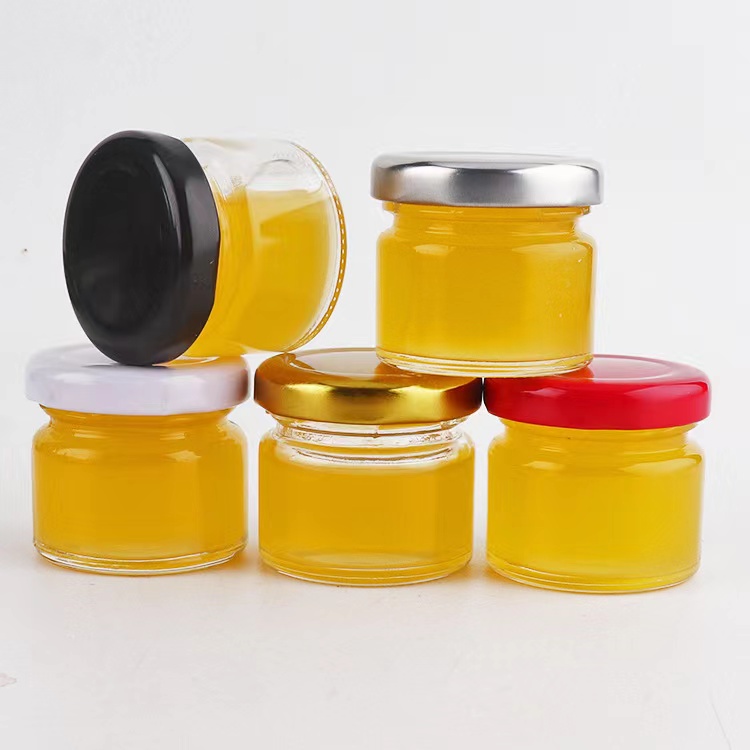
Which 25–100 ml mini glass jar size fits the intended portion?
Capacity gives a starting point, but the filled product determines whether a small jar is practical. The catalogue lists 25, 35, 50, 75 and 100 ml jars. Their stated dimensions are 43 × 39.5 mm, 43 × 49 mm, 50 × 54 mm, 50 × 64 mm and 54 × 72 mm, respectively. Treat these as the listed jar sizes, then test the actual fill before finalizing artwork or an order.
Match fill amount to the listed capacity
Begin with the quantity the customer should receive. A 25 ml jar may suit a brief tasting or sample format, while larger options give more room for a mini jam jars assortment, a small gift pack or an individual serving. These are packaging concepts rather than confirmed uses for a specific recipe. Product density also means milliliters do not directly equal grams. Fill a sample with the intended food, record its net weight and check the headspace required by the producer’s process.
Check the product at the opening
The body dimensions alone do not show how easily a product can be filled or served. For a thick spread, test whether the filling equipment and a spoon can reach the contents. For a sauce, check how it pours or is scooped from the jar. If the product includes pieces, confirm that they pass through the mouth without being pressed or damaged. A sample filled to the planned level makes these checks more useful than choosing by capacity alone.
How should mini glass jars be matched with lids?
After selecting a likely capacity, confirm the closure against the exact jar mouth. The catalogue photograph shows jars with metal-looking lids, but the available capacity table does not specify lid diameter, thread or finish. A metal twist-off lid for food jars is one closure category to compare, but the pictured lid should not be treated as a verified fit specification.
Confirm the jar finish before selecting a metal lid
Ask for the jar drawing or a sample and the proposed lid specification. Compare the finish dimensions and engagement details, then test the closure on the jar. Its published nominal diameter does not establish compatibility with this mini jar range. Use the company’s cap size confirmation service to review the pairing using the jar sample or drawing.
Review each food and process separately
Search phrases such as mini honey jars and small glass jars for sauces describe potential buying contexts. Honey, jam, mayonnaise-style sauces and other foods differ in texture, formulation and filling conditions. Ask the closure supplier to review the food description, filling temperature, storage conditions and any planned heat treatment. Fit testing alone does not prove suitability for hot filling, pasteurization or sterilization. The food producer should validate the complete packaging system under its actual process.
What should labels and cartons account for?
Once the jar and closure are defined, the packaging dimensions can guide label artwork and transport packing. The five listed sizes vary in height and body width, so a single label layout may not fit every capacity.
Keep the label within the usable surface
Measure the available straight-sided area on a sample, including the shoulder and base transitions. Mini glass jars leave less room for mandatory product information, branding and lot details than larger packs. Check the smallest size first if one design must cover a family of capacities. A print proof applied to each jar can reveal curved edges, hidden text or a label that competes with the product’s appearance.
Protect small jars in the shipping carton
Small packs can move inside an outer carton if the spaces between them are not controlled. Confirm the count per carton, divider layout and cushioning with a packed sample. Check that jars remain separated during handling and that the closure cannot rub against neighboring glass. The final carton design should be assessed with the selected jar, lid and label together, since each component affects the packed dimensions.
Packaging support for small glass jars
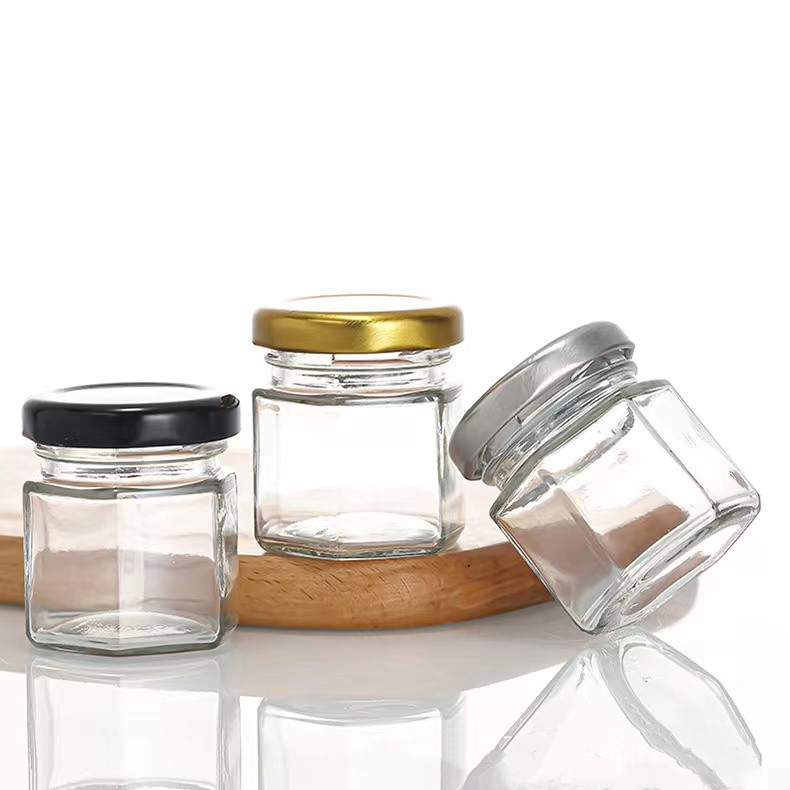
Yantai Original Import and Export Co., Ltd. supplies glass containers and related closures. For this Mini Glass Jar range, buyers can share the preferred capacity, food type, estimated quantity and process conditions to discuss available specifications and the information needed to confirm a lid match. The website does not currently show a separate Mini Glass Jar product detail page.
Conclusion
Choose among the 25, 35, 50, 75 and 100 ml mini glass jars by testing the intended fill, not by capacity alone. Then confirm the mouth and lid as a specific pairing, fit the label to each jar size and review the packed carton with samples. This sequence helps buyers develop a practical small-format pack while keeping food and process suitability subject to the producer’s validation.
FAQs
What sizes are listed for these mini glass jars?
The catalogue lists transparent jars in 25, 35, 50, 75 and 100 ml capacities. It also gives a body size for each option, but does not provide a matching lid diameter in the capacity table.
Can these jars be used for honey, jam or sauces?
Those are possible packaging applications to evaluate, and the phrases mini honey jars, mini jam jars and small glass jars for sauces describe relevant search contexts. Confirm the product’s filling, serving, storage and closure requirements with a sample and the food producer’s technical team.
How do I confirm which lid fits a mini jar?
Provide the jar drawing or physical sample and ask the supplier to check the mouth finish against the proposed lid. Test the assembled pairing before approving production, because capacity or a photograph alone does not establish closure compatibility.


