


In many packaging discussions, bottle caps barely get a seat at the table. They are small, standardized, and easy to overlook. Early decisions are often driven by unit price or short-term availability, especially when production volumes are still manageable and problems feel unlikely to scale.
That logic usually holds—until it doesn’t.
As production runs extend, export volumes increase, and line speeds are pushed higher, costs that once seemed theoretical begin to surface in very practical ways. Freight bills creep up. Damage rates stop being random. Rework becomes routine rather than exceptional. Complaint handling turns into a recurring operational task instead of an occasional disruption. None of these costs are dramatic on their own. Together, over time, they reshape the real cost structure of packaging.
This is where aluminum bottle caps begin to change the conversation. Not because they are inherently premium or visually different, but because they behave more predictably across long production cycles. That predictability has financial consequences that rarely show up in a quotation spreadsheet.
Why Unit Cost Is a Poor Predictor of Long-Term Packaging Expense
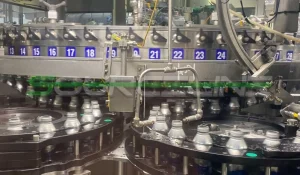
At low volume, most closure solutions appear to work just fine. Lines run smoothly. Quality teams sign off on samples. Logistics costs stay within expectations. Small inefficiencies are absorbed by the system without much friction.
Long-term production exposes a different reality. Repetition amplifies small variations. What used to be a tolerable deviation becomes a recurring issue. What looked like a minor logistics surcharge turns into a permanent line item.
When manufacturers focus only on unit price, they often miss how material behavior affects downstream operations. Packaging is not just a component; it is a system input. Once production scales, that input begins to influence freight efficiency, line stability, labor allocation, and customer-facing risk.
Freight Weight and the Quiet Mathematics of Shipping
Freight weight is one of the least debated variables in packaging decisions, yet it is one of the most consistent cost drivers over time. In domestic distribution, weight differences may feel marginal. In export-oriented production, especially when shipments move by sea or rail, weight becomes a multiplier.
A few grams per cap does not sound like much until it is multiplied by hundreds of thousands of units per shipment and dozens of shipments per year. The effect shows up in container utilization, pallet density, and freight classification. Once volumes cross certain thresholds, weight determines not just cost, but routing options and delivery timelines.
Aluminum bottle caps benefit from a favorable balance between strength and weight. They maintain structural integrity without requiring excess material. Over long production runs, this allows manufacturers to move more finished goods per shipment without increasing damage risk. The savings are rarely dramatic in a single invoice, but they are persistent, which makes them difficult to ignore over time.
Damage Rate Is an Operational Cost, Not a Quality Footnote
Damage rate is often discussed in the language of quality control, but its real impact is operational. Every damaged cap represents more than scrap. It represents wasted machine time, additional inspection, and sometimes lost throughput.
In high-speed capping environments, material behavior matters more than appearance. Caps are subjected to repeated mechanical stress, compression, and release. Materials that deform unevenly or recover slowly increase the chance of misalignment, cosmetic defects, or sealing inconsistency.
Aluminum bottle caps tend to hold their shape more consistently during application and handling. This reduces the frequency of small defects that trigger rejection or downstream correction. The difference between a fraction of a percent in damage rate may seem trivial. At scale, it translates into fewer interruptions, less scrap, and a more predictable production rhythm.

Rework: The Cost That Grows Without Warning
Rework is one of the most underestimated expenses in packaging operations. It rarely appears in planning documents because it feels temporary. A few rejected units here, a manual check there. Over time, rework becomes institutionalized.
Each reworked unit has already consumed labor, energy, and floor space. It has already passed through multiple production steps. The cost of correcting it is far higher than the cost of producing it correctly the first time.
Material stability plays a quiet but decisive role here. When caps behave consistently across batches and over time, torque settings remain reliable. Sealing performance stays within a narrow band. Fewer units fall into the gray area that requires human intervention.
Aluminum bottle caps, when produced under controlled conditions, reduce this gray area. They do not eliminate rework entirely, but they limit its growth as production scales.
Complaint Handling and the Downstream Cost of Instability
Customer complaints related to packaging are rarely isolated events. They trigger internal reviews, cross-department communication, and sometimes corrective actions that ripple back through production and logistics.
In export markets, the stakes are higher. A single complaint can raise questions about compliance, handling, or supplier reliability. When complaints repeat, they erode trust and consume resources far beyond the cost of a replacement unit.
Many of these complaints trace back to closure performance. Loose caps, leaks during transport, or visible deformation often originate from subtle inconsistencies during sealing. Aluminum bottle caps, by maintaining stable geometry and liner interaction, reduce the likelihood of these failures. Fewer failures mean fewer complaints. Fewer complaints mean less time spent managing problems instead of improving processes.
Batch Consistency as a Cost-Control Mechanism
Batch consistency connects nearly every hidden cost discussed so far. When batches behave the same way, production teams trust their settings. When they don’t, teams compensate by slowing lines, increasing inspection frequency, or accepting higher defect rates.
In long-term production, variability is expensive. It forces conservative operating choices that limit throughput and efficiency. Aluminum bottle caps, produced with controlled forming and material specifications, tend to show narrower variation between batches. This predictability allows production systems to run closer to their intended capacity without constant adjustment.
When Aluminum Does Not Automatically Reduce Cost
It would be misleading to suggest that aluminum bottle caps are always the most cost-effective option. Certain applications involve corrosive contents, extreme cost sensitivity, or specialized performance requirements that favor alternative solutions.
The cost benefits of aluminum become most apparent in long production runs where stability matters more than initial savings. Understanding where that boundary lies is part of responsible decision-making. Packaging choices should be evaluated in context, not in isolation.
About Yantai Original
Yantai Original is a packaging solution provider focused on aluminum bottle caps, glass bottles, and related packaging components. Since its establishment in 2017, the company has supported customers across more than 50 countries, serving both emerging brands and high-volume producers. With automated production lines and an emphasis on batch consistency and sealing reliability, Yantai Original works with manufacturers who view packaging as a long-term operational factor rather than a short-term cost decision.
Conclusion
The hidden cost benefits of aluminum bottle caps in long-term production rarely announce themselves early. They appear gradually, through lighter freight loads, lower damage rates, reduced rework, and fewer customer complaints. None of these factors alone justifies a material decision. Together, over time, they shape the true cost of ownership.
For manufacturers planning to scale, the real question is not whether aluminum bottle caps cost more per unit, but whether they help keep production predictable as pressure increases. In long-term operations, predictability is often the most valuable cost advantage of all.
FAQs
What hidden costs do aluminum bottle caps help reduce over time?
They can lower freight-related expenses, reduce damage rates, limit rework, and decrease the frequency of packaging-related customer complaints.
How does freight weight influence long-term packaging cost?
Small weight differences add up across large volumes and repeated shipments, affecting container utilization and overall logistics efficiency.
Why does damage rate become more important at scale?
At high volume, even minor increases in damage rate lead to significant scrap, rework, and production disruption.
Can aluminum bottle caps reduce complaint handling workload?
More stable sealing performance generally results in fewer leaks or failures during transport, which reduces customer complaints and internal follow-up work.
Are aluminum bottle caps always the best choice?
Not in every scenario. Their advantages are most pronounced in long-term, high-volume production where consistency and stability directly affect cost.


