


A leak-proof bottle cap is more than a bottle cap, it is a vital component to safeguard products, prevent leakage during transport and to create an excellent customer experience. For products like essential oils, cosmetics, medicines and specialty chemicals leakage of only a few drops can cause serious damage, odor loss, customer complaints and extra transport costs. Therefore selecting a suitable 18mm bottle cap of high quality is of utmost importance for packaging suppliers as well as for brand owners.
Sealing a bottle is not just about screwing on a cap. Various components influence leak-proofing such as the material of the cap, the quality of the threads on the neck of the bottle, the design of the liner, the type of seal, how the cap is tightened using torque, and the compatibility of the cap with the neck of the bottle. Advanced production and stringent quality control measures also need to be taken in order to guarantee consistent sealing for large batches.
A guide to the engineering behind a perfect leak-proof 18mm bottle cap. This guide explains how choosing the right material, the design of the cap, the type of seal and quality control all work together to make a cap that is leak-proof for bottles of essential oils, plastic bottles of all shapes and sizes and other liquids that need to be packaged.

What Factors Determine the Leak-Proof Performance of an 18mm Bottle Cap?
The leak proof 18mm bottle cap is designed using the highest standards of engineering, and utilizing the optimal materials for the product seal. The resulting leak proof function will allow all products such as essential oils, serums, etc. that are in liquid form to be safely dispensed whilst in use. When manufacturing products such as plastic bottles and essential oil bottles it is a basic quality criterion that the bottle cap closure does not leak.
Material Composition and Its Role in Sealing
Material selection forms the foundation of leak-proof performance. High-quality polymers like polypropylene (PP) and polyethylene (PE) are widely used due to their chemical stability, flexibility, and resistance to deformation under pressure. The elasticity of these polymers allows the cap to maintain consistent contact with the bottle neck, ensuring an even compression force across the sealing surface. This property is particularly critical for applications involving temperature variations or volatile liquids such as essential oils.
Another consideration is the compatibility of the cap material with the product formula. A water-based formula cap is not necessarily suitable for oil-based or alcohol-based products, unless the polymer used in the cap is specifically adapted. PE liners for example are very suitable for viscous products and are permanently flexible, yet aromatically stable, so they can also be used for essential oils containing aromatic compounds.
Design Precision of the Cap Thread and Neck Finish
The geometric accuracy of the thread structure directly influences sealing reliability. The thread pitch, angle, and depth must align precisely with the bottle neck to achieve proper torque during closure. Any deviation can cause cross-threading or uneven engagement, which compromises seal integrity. Dimensional consistency between batches ensures that every 18mm cap fits uniformly across standard glass or plastic bottles.
Our precision molded threads allow our bottles to be caped automatically in high speed production environments without slipping and/or being off centered. These threads also assure that there are no micro-gaps which could allow vapor to escape as well as liquid to leak from the bottle over time.
The Importance of Inner Liners in Leak Prevention
Inner liners are secondary barriers used to improve the sealing of bottles. They compensate for the small imperfections of the bottle rim. Inner liners are made of PE foam, EVA or aluminum foil laminates. Especially the compression liners have the advantage that they are stable in temperature and not loosing their elasticity.
Liners are a vital component for 18mm cap application to Essential Oil bottles. Protecting against oxidation and evaporation that can deteriorate product quality, the liners provide cushioning to assist distribution of pressure when capping torques are applied.
How Does Seal Technology Enhance the Leak-Proof Feature?
Seal technology or closure technology defines how packaging maintains contents during transportation under stress such as vibration and pressure changes. Packaging with small formats like bottles filled with essential oils are losing valuable content and even become contaminated by very small leaks. For this kind of packaging an adequate and innovative seal technology is needed.
Types of Sealing Mechanisms Used in 18mm Caps
Seals that form a hermetic barrier by using electromagnetic energy to bond a foil liner to the opening of a container are called Induction seals. These type of seals are Tamper evident until first use. When it comes to Pressure sensitive seals, they offer convenience in that they stick when closed without the need of any heat to apply the seal. They are most suited for low volume production runs or for use on refillable plastic bottles.
Tamper-evident bands have been incorporated into certain of the 18mm diameter seal designs, enabling visual verification of a seal’s integrity whilst maintaining seal performance after seal opening. These special features have been designed to assist in compliance with safety verification requirements that are legislated in Cosmetic and Pharmaceutical packaging sectors.
The Role of Torque Application During Capping
The amount of torque put on the cap determines how tightly the cap will compress the liner against the bottle rim. With the right amount of torque the cap will be able to make sure that the liner is being squeezed equally in all places without bending or scratching the threads on the neck of the bottle, or damaging the liner material. There is such a thing as too much torque as well as not enough. Too much can actually cause the cap to distort the plastic or even strip the threads on the neck of the bottle, and not enough torque will not provide enough compression to the liner to create a seal and allow the liquid in the bottle to leak out.
Our Automated Torque Monitoring Systems provide closed loop control of the amount of force put on containers during the closing process. They provide real time data on the amount of force being applied which allows for precise control and monitoring of the process. This ability to monitor and control the process allows for consistent quality of every container being closed and also allows for monitoring and control of process as it scales to meet increasing demand.
Why Are 18mm Bottle Caps Commonly Used for Essential Oil Bottles?
For the sensitive products of essential oils – very volatile and sensitive to oxygen – the highest quality of packaging is required. The standard cap size of 18mm is widely used, as it provides the best balance of small packaging and a secure closure, compatible with glass as well as plastic bottles.
Compatibility with Glass and Plastic Bottles
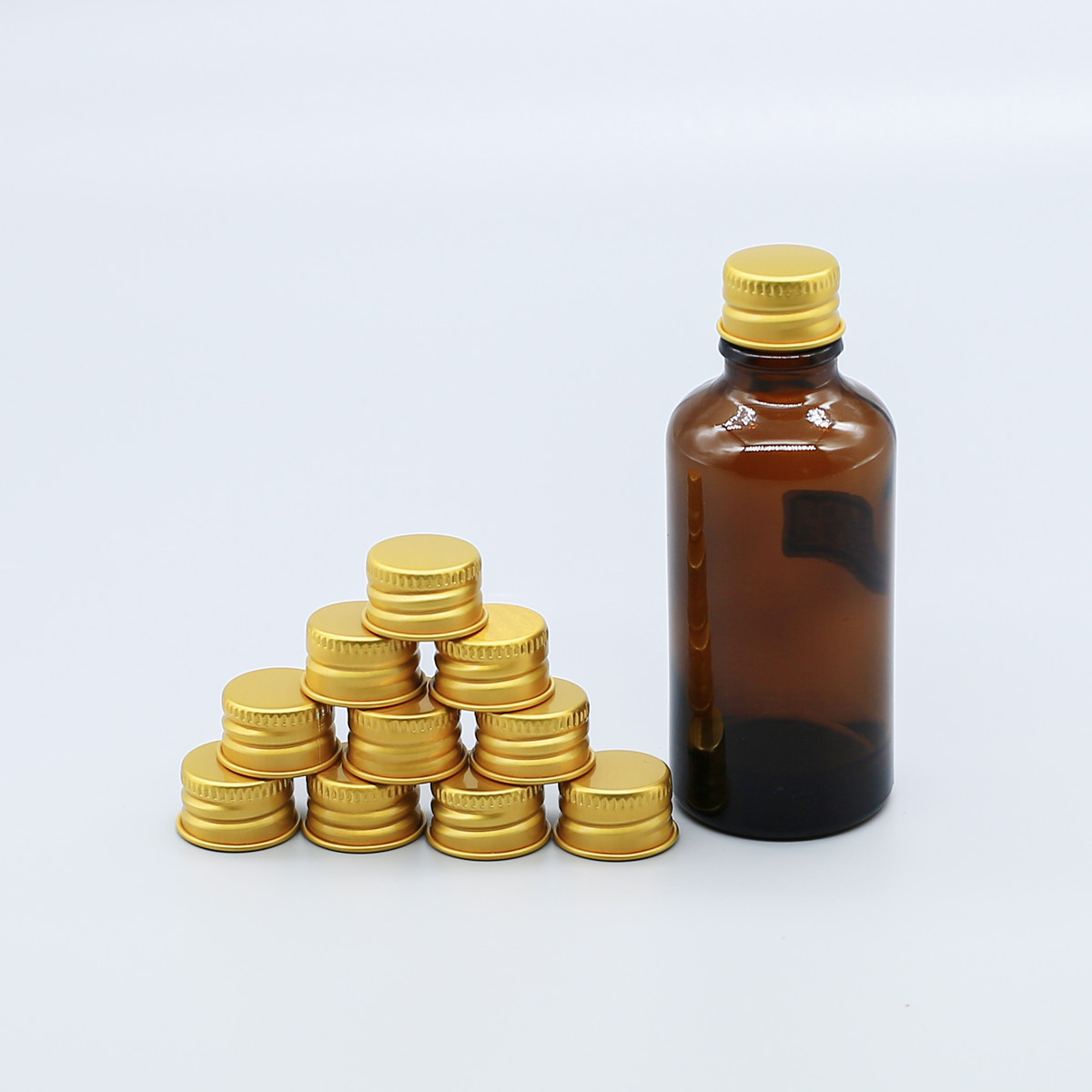
Our 18mm caps are compatible with amber glass bottles to protect light sensitive oils as well as various plastic bottles designed to be light weight and portable. Our Polycone inserts as well as our dropper style seals can be added inside of these caps to help prevent evaporation while allowing for controlled dispensing.
From the chemical resistance perspective, our PP-based caps are also very stable with respect to aromatic compounds and resistant to degradation by terpene-rich essential oils. As a result, they are able to resist odour transfer and material degradation over long storage periods.
Aesthetic and Functional Balance in Essential Oil Packaging
Beyond functionality, design aesthetics influence brand perception in premium markets such as aromatherapy and natural cosmetics. The compact silhouette of an 18mm roll-edge cap complements small-volume containers ranging from 5ml to 30ml capacities commonly used for essential oils.
The smooth surface finish of the plugs and ingress protection covers can be custom finished to match specific brand colors or even carry embossed logos. These characteristics enable the covers to be provided with unique customized features without compromising the sealing integrity. Optional droppers and/or reducer inserts are available to enhance user convenience.
How Do Manufacturers Test Leak-Proof Performance?
Each closure design undergoes laboratory validation prior to entering mass production to test for leak-tightness under realistic handling stresses in simulated use conditions.
Laboratory Testing Methods for Seal Integrity
Vacuum decay testing detects very small holes invisible to inspection while Pressure retention testing confirms the seal of caps and containers maintaining pressure while subject to physical vibration or elevated altitude during export by air.
Thermal cycling testing simulates repeated temperature swings between hot and cold and tests how well the liner of a sample and the test material itself are able to recover from such swings. In practice thermal cycling is often used to test how goods within a global supply chain cope with variable temperatures along the chain.
Quality Control During Production Runs
For continuous manufacturing processes random checking of samples from batches can check for uniformity, whilst visual checking of moldings for surface defects such as flash or warping can check for defects which could affect the accuracy of the threads. Statistical process control (SPC) is used to check and monitor the dimensional tolerances of parts throughout the production process. The performance metrics for each part will have been set prior to commencement of the production process and will apply to all parts produced during the process.
What Makes Yantai Original Import and Export Co., Ltd a Reliable Bottle Cap Supplier?
Yantai Original Import and Export Co., Ltd is a Chinese manufacturer of precision-made closures for high-seal purposes for cosmetics, pharmaceuticals, food-graded liquid products such as essential oils and other plastic containers which require a superior leak-proofing.
Commitment to Engineering Excellence and Quality Assurance
We use advanced injection molding technology which enables a consistent and precise quality for every cap produced regardless of the ordered quantity. The required test for leak tightness is performed before delivery to our customers to enable a immediate use of the received parts for the filling line operation.
Continuous investment in research and development enables innovation in polymer blends and liner compositions optimized for specific viscosity ranges—from lightweight aqueous solutions to dense aromatic oils—addressing diverse market demands globally with consistent reliability standards.
Conclusion: Key Takeaways on Achieving a Leak-Proof 18mm Bottle Cap
A truly leak-proof 18mm bottle cap is the result of the best materials, the most precise engineering, the most robust seal and the strictest quality controls. Each of the parameters mentioned above, such as the elasticity of the polymer used, the torque value of the cap, all are crucial in order to guarantee the product’s integrity, the brand’s credibility and the consumers’ satisfaction. There are many markets and many industries where bottles are filled with essential oils or with liquids which are put into plastic bottles, in screw cap bottles or in other types of bottles which need to be sealed.
FAQs
1. What materials are most effective for producing leak-proof 18mm caps?
Polypropylene (PP) and polyethylene (PE) are preferred due to their combination of flexibility, chemical resistance, durability at different temperatures and long term sealing performance. This makes them suitable for a wide range of formulations, including highly volatile essential oils.
2. How does an inner liner improve sealing efficiency?
The inner liner also compensates for any surface irregularities and ensures that the same degree of compression is achieved throughout the whole bottleneck area. Even under mechanical stress, thermal expansion or vibration, the inner liner is designed to withstand any transportation stresses and ensure that no leakage occurs.
3. Can induction sealing be applied to all types of bottles?
Induction sealing is best performed on containers with conductive foil liners typical for plastic neck finishes and are closed hermetically by the sealing process. These types of closures are used for sensitive liquid products and often include a tamper evidence protection layer.
4. Why is torque control important during capping operations?
By controlling the amount of torque applied when capping containers, you can prevent under-tightening which can lead to leakage, and over-tightening which can cause damage to threads. The use of controlled torque during the automated capping process, enables consistent and uniform compression, which helps to support the quality of output, in terms of consistently meeting predefined quality metrics, for each batch that is processed.
5. How does Yantai Original Import and Export Co., Ltd ensure product reliability?
By conducting strict quality control measures, utilizing advanced manufacturing technologies, and continuing to improve on its manufacturing processes, Yantai Original Import & Export Co., Ltd. is able to produce a leak-proof cap that has gone through thorough testing to guarantee its quality. It is a reliable component in global packaging supply chains, used in cosmetic, pharmaceutical, and food packaging.


