


Sealing reliability is rarely discussed when a packaging project begins.
At that stage, teams focus on bottle shape, label design, and production speed. Closures usually come later, almost as a technical detail that can be finalized once everything else is locked.
That order works—until it doesn’t.
When problems eventually surface, they almost never appear during pilot runs or early samples. They show up after shipping, after storage, or after the first few large batches reach the market. By then, the issue is no longer technical. It becomes operational, commercial, and sometimes reputational.
This is why, for many experienced buyers, sealing reliability has become the real benefit they look for in aluminum bottle caps—not surface decoration, not unit price, and not even recyclability, at least not at first.
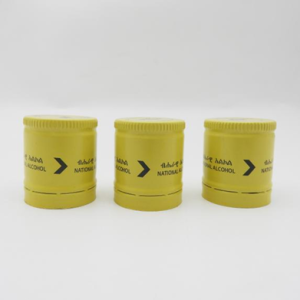
Why Sealing Problems Rarely Show Up During Testing
Most closure systems pass initial tests without difficulty.
Torque readings look fine. Leak tests come back clean. Everything seems under control.
The problem is timing.
Testing environments are stable. Bottles are filled, capped, and evaluated within a short window. Temperature does not fluctuate much. Transport vibration is absent. Storage time is limited.
Real distribution conditions are different. Bottles travel. Pallets shift. Temperatures rise and fall. Pressure inside the bottle changes slowly, then repeatedly. Small inconsistencies that were invisible on day one begin to matter.
Most sealing failures are discovered by logistics or quality teams, not by engineers during development.
There is usually a moment when someone asks, “Why didn’t we see this earlier?”
The honest answer is that nothing was technically wrong earlier. The system simply had not been stressed long enough.
What Sealing Reliability Actually Means in Production
It is not about how tight the cap feels at application
A cap can feel secure and still fail later. Initial tightness only reflects one moment in time. It does not account for material behavior after weeks of vibration, pressure cycling, or humidity exposure.
It is about how consistent sealing remains across thousands of units
Variability is where problems start. A narrow torque window during early production can widen over time. Some bottles stay perfect. Others begin to drift. That inconsistency is often what triggers complaints.
It is about performance after conditions change
Heat, cold, and movement expose weaknesses that static tests cannot. Sealing reliability is measured in how little performance shifts when conditions are no longer ideal.
Why Aluminum Caps Handle Sealing Stress Better Over Time
Aluminum behaves predictably under stress.
It does not flex easily, and it does not creep the way some softer materials do. That rigidity helps maintain liner compression even when external forces change.
Over long storage periods, dimensional stability matters more than appearance. Aluminum shells retain shape, which allows liners to keep doing their job without being overworked. This balance is one reason aluminum caps continue to perform well in carbonated beverages, spirits, and export-heavy products.
The shell alone is never the full story. Liner selection, bottle finish accuracy, and application parameters all interact. But aluminum provides a stable base for those elements to work together.
Where Sealing Reliability Is Most Often Lost
Sealing failures are rarely random. They tend to follow patterns.
Transport vibration slowly relaxes systems that were only marginally balanced. Temperature swings expand and contract materials at different rates. Over time, internal pressure finds the weakest point.
Another common factor is bottle finish variation. Even small deviations in thread or height dimensions can affect how force is distributed during application. In isolation, each deviation seems harmless. Across thousands of units, the effect compounds.
These are not dramatic failures. They are quiet ones. A few bottles leak. A few caps feel different. Eventually, the pattern becomes impossible to ignore.
How Teams Reduce Sealing Risk Before It Becomes a Claim
Experienced teams think about sealing reliability before production begins.
They confirm bottle neck dimensions rather than assuming nominal sizes are sufficient. They match liner materials to the actual liquid inside the bottle, considering carbonation level, alcohol content, and storage duration. They allow for real-world conditions, not just factory-floor ones.
Just as importantly, they avoid splitting responsibility across too many suppliers. When caps, bottles, and secondary packaging come from unrelated sources, tolerance mismatch becomes more likely. Aligning these components early reduces the number of variables that can drift later.
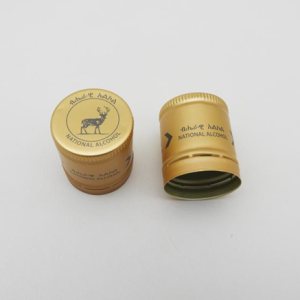
When Sealing Reliability Becomes a Supplier Issue
At a certain scale, reliability is no longer just a product attribute.
It becomes a supply-chain issue.
Suppliers who understand this tend to talk less about individual components and more about how those components interact. They ask for drawings. Sometimes they ask for physical samples. They verify before they produce.
This approach takes more effort upfront, but it reduces downstream risk significantly.
Where Yantai Original Fits Into Sealing-Critical Projects
In projects where sealing performance cannot be treated as an afterthought, suppliers often play a more technical role.
Yantai Original works with aluminum caps, glass bottles, and cartons as a coordinated system rather than isolated items. By verifying bottle neck dimensions and matching cap size and liner selection accordingly, the company helps reduce leakage caused by tolerance mismatch. This integrated approach addresses one of the most common sources of sealing-related failure in export packaging.
For buyers managing multiple markets or varying production volumes, this kind of coordination often proves more valuable than focusing on any single specification.
About Yantai Original
Yantai Original Package Co., Ltd. is a China-based manufacturing and trading company established in 2017, specializing in aluminum bottle caps, glass bottles, and secondary packaging. Located in Yantai, Shandong, the company supports customers in over 50 countries with flexible production capacity and integrated packaging solutions.
With automated cap production lines and experience across beverage, spirits, food, and pharmaceutical applications, Yantai Original focuses on stable specifications and practical compatibility. Its role in many projects is to reduce uncertainty—especially where sealing performance and component matching are critical over long distribution cycles.
Conclusion
Sealing reliability is easy to overlook when everything looks fine at launch.
It becomes visible only after time, movement, and pressure have done their work.
For many teams, the real lesson is not that a cap failed, but that the system around it was never fully aligned. When sealing is treated as a long-term behavior rather than a short-term test result, aluminum caps tend to perform quietly and consistently.
That quiet performance is often the most valuable benefit of all.
FAQs
Why do sealing issues often appear after shipping rather than during testing?
Because transport and storage introduce vibration, pressure changes, and time—factors that are rarely fully replicated in early tests.
Is liner choice more important than the aluminum shell itself?
In many cases, yes. The shell provides stability, but the liner determines how sealing force is maintained over time.
Can sealing reliability be fully verified before mass production?
Risk can be reduced, but not eliminated. Verifying bottle finishes, liner compatibility, and application parameters early makes a significant difference.
Why do some batches perform differently even with the same cap specification?
Small variations in bottles, application conditions, or storage environments can accumulate and affect sealing consistency.
When should sealing reliability be addressed in a packaging project?
Earlier than most teams expect—ideally before finalizing suppliers and tooling.


