


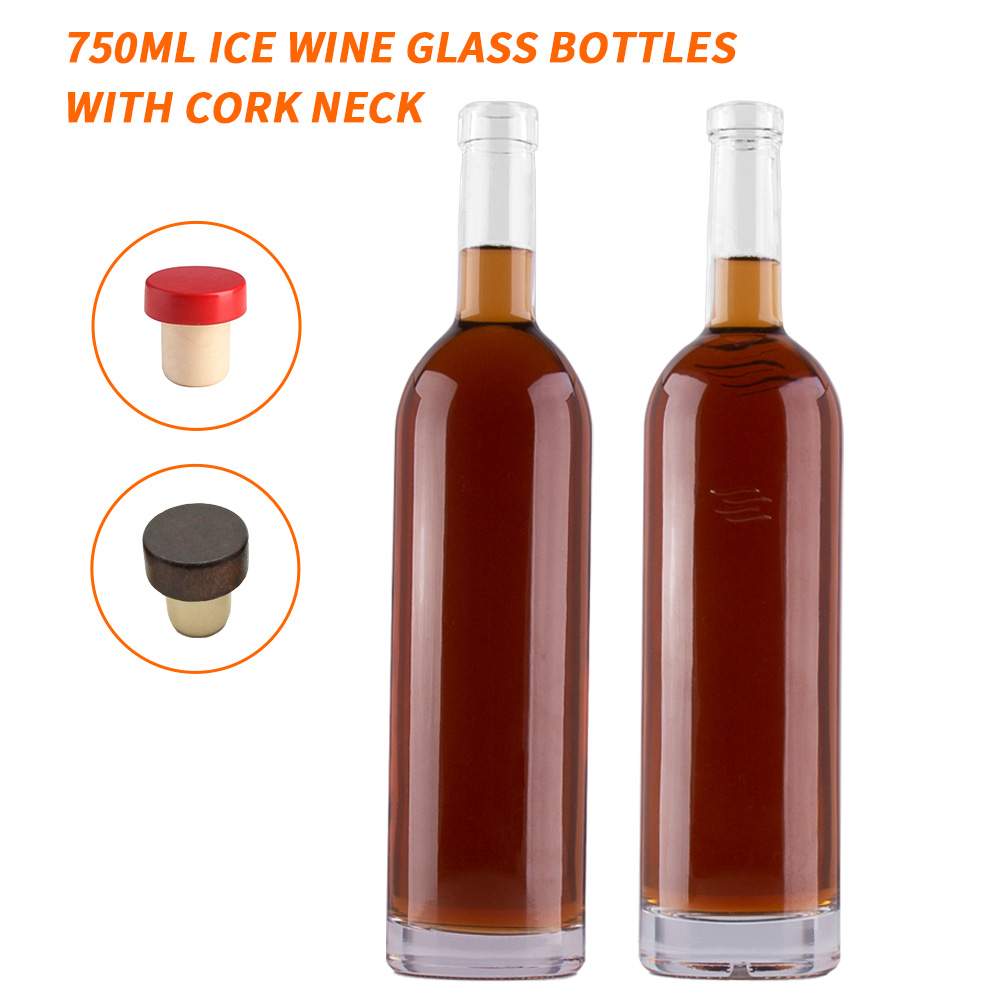
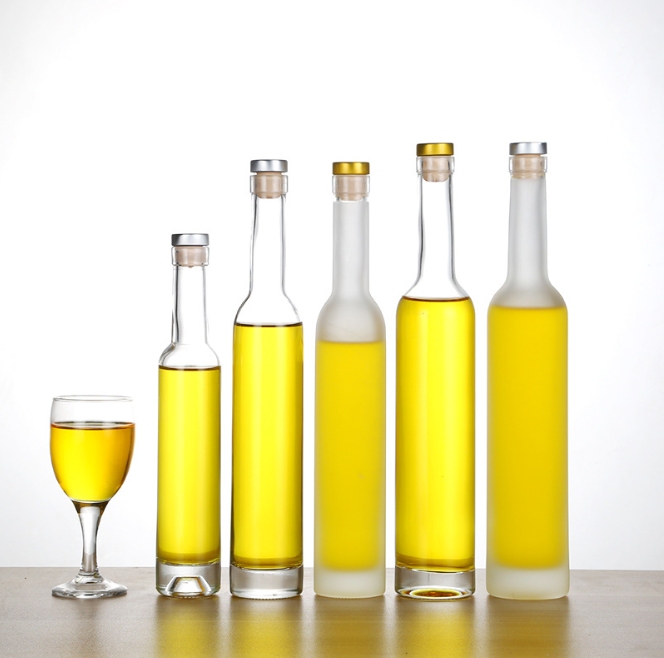
Ice Bottle Packaging System operates only when all components – the glass bottle, the cork, the PVC capsule, the label, and the box – are considered as an entire system. The product line comprises 200 ml, 375 ml, 500 ml, and 750 ml in flint or antique green glass. The 200 ml bottle is combined with the 29×60 mm PVC capsule, whereas the 375 ml, 500 ml, and 750 ml – with the 30×60 mm capsules. This is what the nominal size suggests, although the sample and drawings should verify the exact size.
For wineries comparing Ice Bottles, the main purchasing question is not simply which capacity looks best. Buyers must verify the cork finish, bottle-mouth geometry, capsule diameter and height, label panel, filling-line compatibility, and protective packing. A structured review prevents a bottle that looks correct in a catalog from creating problems during corking, shrinking, labeling, or export distribution.
Which Ice Bottle Capacity Fits the Packaging Program?
Capacity affects more than fill volume. It changes the bottle profile, closure interface, label area, capsule requirement, carton count, and line setup. Each SKU should therefore be approved as a complete pack rather than as an isolated glass container.
Use 200 ml for compact formats
The 200 ml Ice Bottle works well for projects requiring a small presentation, although the closure for this container will be different from that for the other sizes. From the catalog, it can be seen that the cap used is the 29×60 mm PVC capsule. The buyers will need to get the correct illustration of the bottle and the specifications for it.
Standardize 375 ml, 500 ml, and 750 ml formats
The 375 ml, 500 ml, and 750 ml Ice Bottles are listed with 30×60 mm PVC capsules. A common nominal capsule specification may simplify artwork and sourcing, but it does not prove that every bottle will run identically. Differences in neck contour, glass tolerance, cork position, and capsule application equipment still require separate sampling and line trials for each capacity.
How Should the Cork Finish Be Matched?
A cork finish describes the bottle opening but does not define a complete closure specification. The winery and supplier must agree on bottle-mouth dimensions and the cork selected for the liquid and corking equipment.
Confirm the bottle mouth and cork dimensions
Provide the internal mouth diameter, insertion depth, finish drawing, proposed cork material, cork diameter, and cork length. The cork should compress enough to form a stable seal without requiring excessive insertion or extraction force. Because natural, technical, and synthetic corks behave differently, the final combination must be tested with production-representative bottles rather than selected from the bottle capacity alone.
Test the closure under realistic conditions
Run samples through the intended corker and record insertion depth, visible damage, leakage, extraction force, and bottle-to-bottle consistency. Filled samples should also be observed under expected storage and distribution conditions. Temperature change, vibration, time, and bottle orientation can reveal a mismatch that is not visible immediately after corking.
How Do 29×60 mm and 30×60 mm PVC Capsules Differ?
The capsule is a decorative and tamper-evident secondary component; it does not replace the cork as the primary closure. The diameter and height must cover the finished neck cleanly while coordinating with the cork position and label design.
Match the nominal size to the correct capacity
Use the catalog pairing as the starting point: 29×60 mm for 200 ml and 30×60 mm for 375 ml, 500 ml, and 750 ml. Then place samples over fully corked bottles and check top fit, skirt length, tear feature, and label clearance. An oversized capsule may wrinkle or rotate; an undersized capsule may distort during shrinking.
Approve the application process and artwork
A heat shrink capsule for wine bottles must be tested with the intended heat source and line speed. Approve color, finish, top emblem, side logo, print registration, and perforation on the actual bottle. Trial production should confirm even shrinkage without scorching, loose areas, excessive creasing, or misaligned graphics.
What Else Belongs in the Ice Bottle RFQ?
Include capacity, glass color, bottle drawing, target weight, cork specification, capsule size and artwork, label dimensions, order quantity, packing method, destination, and requested samples. State the filling, corking, capsule, and labeling equipment. Review suitable carton box options after the bottle and closure stack are fixed, then engineer cartons from the finished bottle with dividers and top clearance that protect the pack during handling.
Why Work With a Packaging Supplier?
Yantai Original Import and Export Co., Ltd. supplies glass bottles and related closure and packaging components. Reviewing the bottle, cork, capsule, label, and carton together helps identify incompatible dimensions before production. Final approval should rely on drawings, samples, filled-product tests, and the winery’s equipment.
Conclusion
Effective Ice Bottle packaging should first determine the proper volume and then check all interfaces. First, choose from the catalog combination of 29×60 mm for 200 ml and 30×60 mm for 375–750 ml; however, never assume nominal volume means compatible fit. Confirm the cork with the actual mouth, confirm the shrinkage of the capsule, get label approval on samples, and finally check the package in its shipping container.
FAQs
Which PVC capsule fits a 200 ml Ice Bottle?
The catalog pairs the 200 ml Ice Bottle with a 29×60 mm PVC capsule. The final fit should be checked on a fully corked production sample before bulk ordering.
Can one 30×60 mm capsule be used for all larger Ice Bottles?
It is the listed size for 375 ml, 500 ml, and 750 ml formats, but each bottle profile and production line still requires a separate fit and shrink test.
Does the PVC capsule seal the wine?
No. The cork is the primary closure; the capsule covers and decorates the finished neck.


