

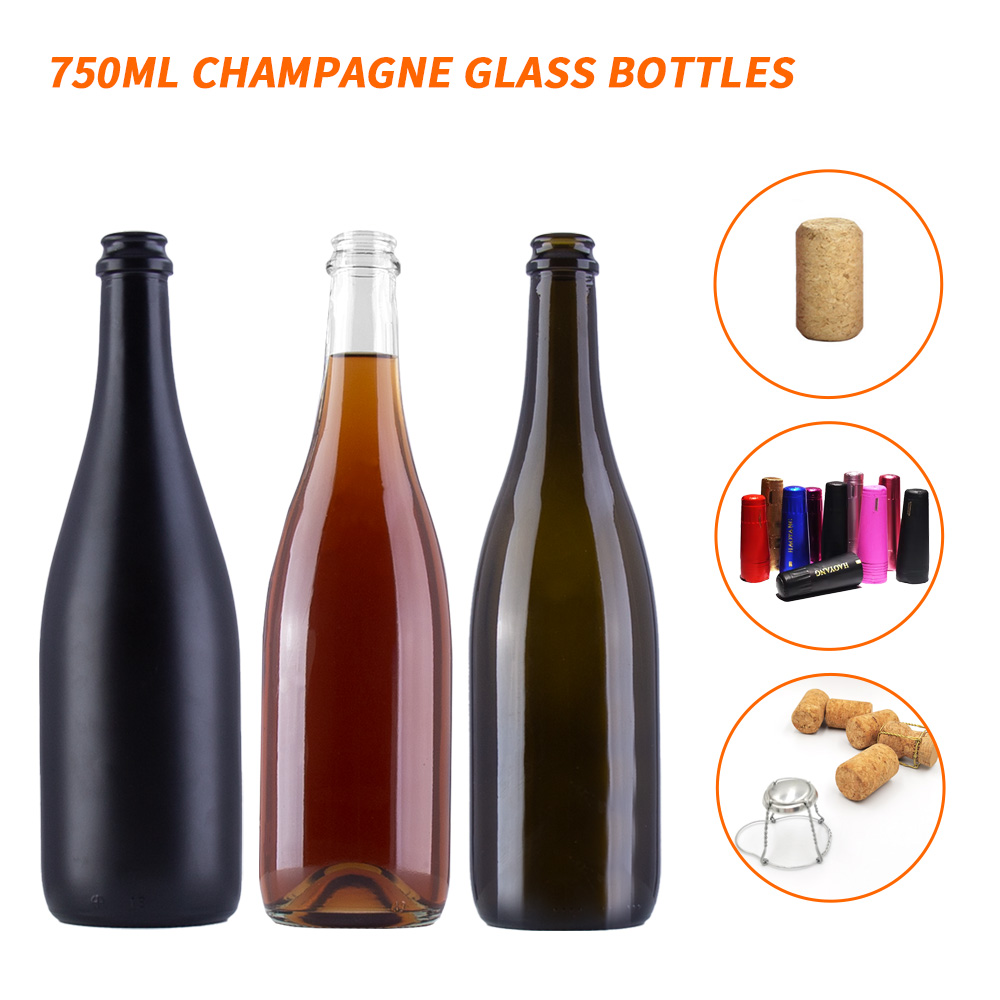
A 750 ml Champagne Bottle is only one part of a sparkling wine packaging system. The catalog format is available in flint or antique green glass and is paired with a 34×120 mm aluminium foil capsule. Before ordering, wineries should verify the bottle drawing, pressure-rated closure system, wire hood, foil capsule, labels, dividers, and export carton as an integrated pack. Nominal dimensions help define the project, but physical samples and production trials determine compatibility.
For buyers sourcing Champagne Bottles, the checklist should begin with the filled product and intended bottling process. Sparkling wine packaging must maintain the required closure configuration and present a consistent premium appearance while surviving handling, warehousing, and transportation. The safest RFQ identifies every component and the test method used for approval.
What Should Be Confirmed for the 750 ml Bottle?
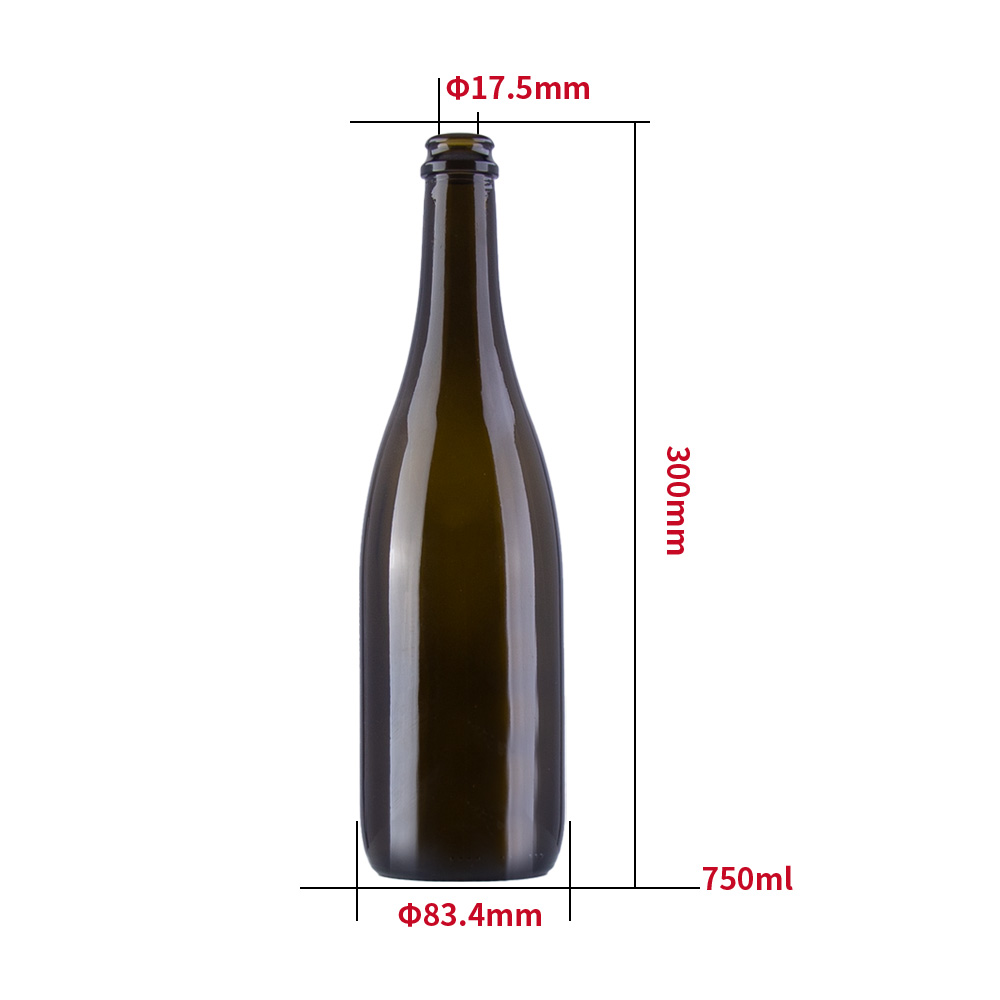
The bottle drawing is the technical foundation for closure, capsule, label, and carton decisions. Request current dimensions and tolerances rather than relying only on a photograph or the nominal 750 ml capacity.
Choose flint or antique green glass
Flint glass gives a clear view of the wine and can support a bright, presentation-led design. Antique green creates a traditional sparkling-wine appearance and changes how label and foil colors read on shelf. The winery should evaluate the selected color with the actual wine, label stock, print finish, storage conditions, and expected light exposure before final approval.
Review the bottle drawing and samples
Confirm bottle height, body diameter, weight, brimful capacity, label panel, base profile, neck geometry, and finish dimensions. Production-representative samples should be tested on filling, closure, labeling, packing, and palletizing equipment. A bottle that appears correct may still require guide-rail, label-position, or carton adjustments.
How Should the Closure System Be Validated?
The bottle, cork, wire hood, and application process must be treated as a pressure-retaining system. The catalogue does not specify the cork or wire hood dimensions, so these details must come from the closure supplier, bottle drawing, equipment settings, and validated samples.
Match the cork and wire hood to the finish
Provide the neck drawing, internal mouth dimensions, selected sparkling-wine cork specification, wire hood specification, and intended application equipment. Check cork insertion, wire placement, removal experience, visible glass or closure damage, and consistency across the sample set. Do not infer compatibility from the words Champagne Bottle alone.
Use filled-product and distribution tests
The winery should approve the complete closure under conditions appropriate to its product and route to market. Testing may include filled samples, storage observation, temperature exposure, vibration, and inspection after transport simulation. The validation plan should be agreed with the technical teams responsible for the wine, closure, bottle, and bottling line.
What Must Be Checked for the 34×120 mm Foil Capsule?
The catalog pairs the 750 ml bottle with a 34×120 mm aluminium foil capsule. That size is a procurement starting point, not a guarantee that every closure stack and bottle tolerance will produce the same finished appearance.
Verify coverage over the finished closure
Place capsule samples over bottles fitted with the final cork and wire hood. Check top coverage, skirt length, lower-edge position, shoulder clearance, overlap, tear feature, and alignment with the front label. The capsule should cover the closure cleanly without interfering with the label or accumulating excess material around the neck.
Approve material, decoration, and application
Specify foil color, matte or glossy finish, embossing, printed logo, top artwork, side registration, and any tear feature. Review the supplier’s application instructions and test samples at realistic line speed. The company’s guide to aluminum foil champagne capsules provides additional application context, but the final settings must be established on the winery’s own equipment.
How Should Labels and Cartons Be Planned?
Labels should be sized from the approved bottle drawing and tested on production-representative glass. Confirm front and back label dimensions, gap, vertical position, adhesive, substrate, barcode readability, and alignment with the foil. Inspect flint and antique green samples separately because bottle color changes contrast and perceived print color.
The shipping carton must protect the completed bottle rather than empty glass alone. Define bottle count, filled weight, dividers, top clearance, stacking pattern, pallet configuration, shipping marks, and export route. Review suitable carton box options after the bottle and closure stack are fixed. Pack trials should check glass contact, vertical movement, capsule abrasion, label scuffing, and carton compression.
Why Coordinate the Components With One Supplier?
Yantai Original Import and Export Co., Ltd. supplies glass bottles and related packaging components. Coordinating drawings, samples, artwork, and packing requirements through one review can expose conflicts between the bottle, closure, capsule, label, and carton earlier. The winery should retain final technical approval using its actual product, equipment, and distribution conditions.
What Information Belongs in the RFQ?
State the 750 ml capacity, chosen glass color, bottle drawing, target weight, cork and wire hood specifications, 34×120 mm foil requirement, artwork files, color references, label dimensions, carton count, divider design, order quantity, packing method, destination, and sampling plan. Include the filling, closing, capsule, and labeling equipment so suppliers can review practical compatibility rather than quote isolated parts.
Conclusion
A reliable Champagne Bottle program approves the 750 ml glass, closure system, 34×120 mm foil capsule, labels, and carton as one finished package. Select flint or antique green glass based on the product and brand presentation, confirm the bottle drawing, test the cork and wire hood, trial the foil on the complete closure, and validate carton protection with representative filled weight before mass production.
FAQs
What foil capsule size is listed for the 750 ml Champagne Bottle?
The catalog lists a 34×120 mm aluminium foil capsule. Buyers should verify the final fit over the selected cork and wire hood using production-representative samples.
Can the capsule replace the cork and wire hood?
No. The foil capsule is an outer decorative covering. The pressure-retaining closure system must be specified and validated separately.
When should the shipping carton be finalized?
Finalize it after the bottle, closure stack, capsule, and labels are approved. The carton and dividers should be tested around the complete finished pack, not only an empty bottle.