


When requesting a Marasca glass oil bottle, include the closure in the first sample enquiry. I’d want to pour some oil from it before approving the appearance. In the catalog, look for the heading Aluminium Cap with Stopper: the size beside it is 31.5×24 mm. The adjoining PVC Capsule column reads 31.5×40 mm. Quoting those entries helps identify the pack you’re interested in. There are still questions about the insert underneath and how the assembled bottle will run through your equipment.
Which capacity and color belong in your enquiry?
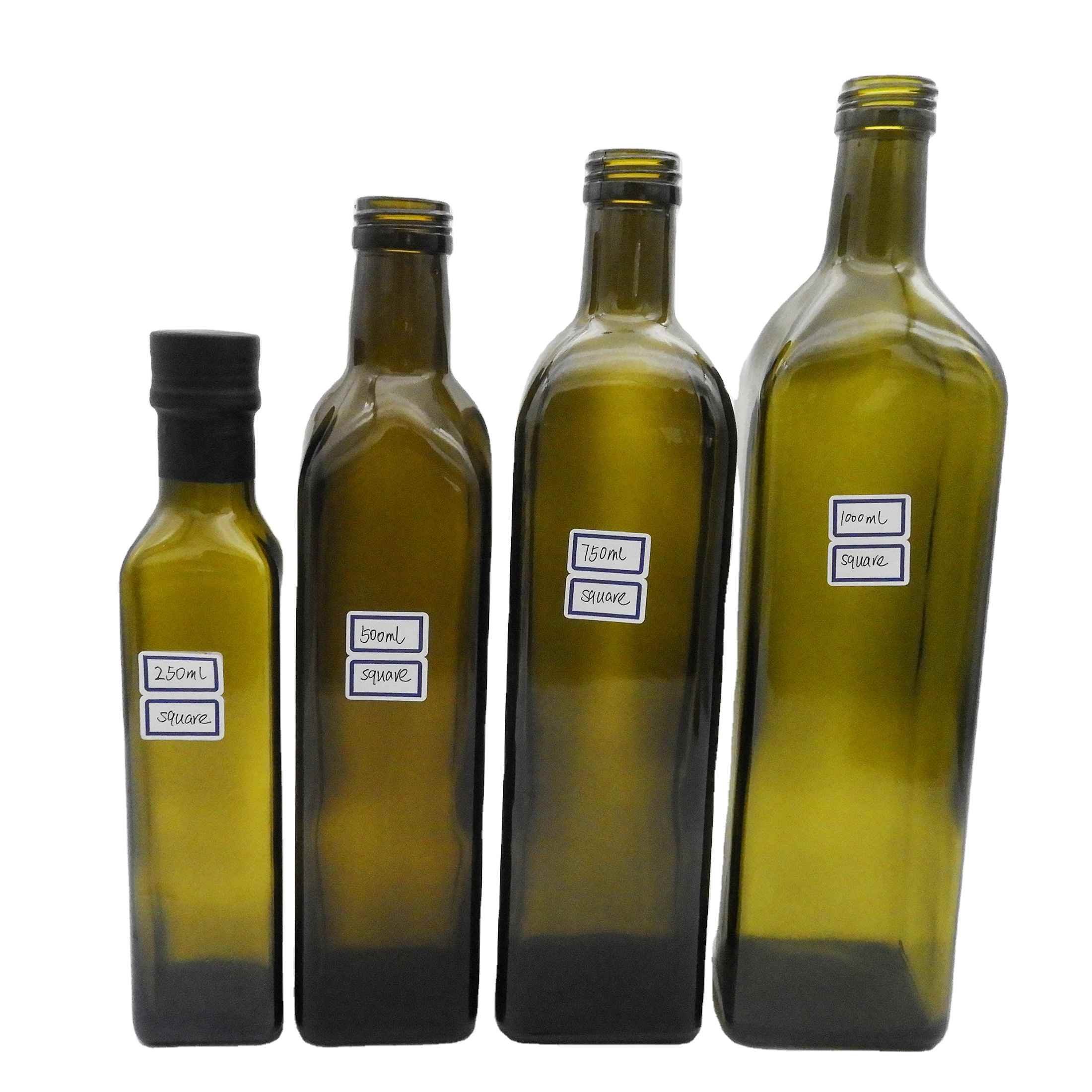
If you’re looking for a small format, the catalog has a 100 ml bottle in antique green. Above that are 250 ml and 500 ml, followed by 750 ml and 1000 ml. For those four, it gives a choice of antique green or flint, meaning clear glass.
Keep the capacity and color together in the enquiry
You’ll find the square Marasca style on the olive oil glass bottle page too. There, the range begins at 250 ml and the description is for antique-green glass. I’d check availability directly if the smaller catalog bottle or flint glass is on your shortlist. A catalog entry and an approved supply specification aren’t quite the same thing.
With several sizes on the shortlist, it helps to label the drawings and samples by capacity. The designer will need the dimensions of the bottle body and the space available for a label. I’d compare the samples with the intended oil inside, particularly if clear glass is being considered. What you can see through the front of the bottle becomes part of the label review.
What comes with the 31.5×24 mm cap?
The catalog calls the closure an Aluminium Cap with Stopper. The relevant cap product page gives more detail: an aluminium outer shell with a plastic pouring insert. That is the structure to discuss, rather than assuming that "stopper" means a cork or a glass spout.
Try the proposed closure with your oil
When trying the olive oil bottle cap, use your intended oil. How it pours still depends on the insert opening and the oil being used. I’d watch the start of the stream, then bring the bottle upright and look at the opening. Is there oil left where you don’t want it? Describe what you see to the supplier; a request for a "good pourer" leaves it guessing what you expect.
Have the neck drawing checked at the same time. What does the size reference leave out? The shape of the neck and the details that determine how the insert sits in the mouth, for a start. A drawing or sample lets the supplier check those. If another cap arrives during the trial, identify it separately so that the pouring notes don’t end up attached to the wrong version.
There is another distinction worth making before quotation. You might want a cap that cannot be refilled, or you might be concerned about drips after pouring. Neither requirement is answered merely by choosing a 31.5×24 mm size. Put the function you need in the brief and ask to see the proposed insert design. It should be a separate approval item.
Where does the 31.5×40 mm PVC Capsule fit?
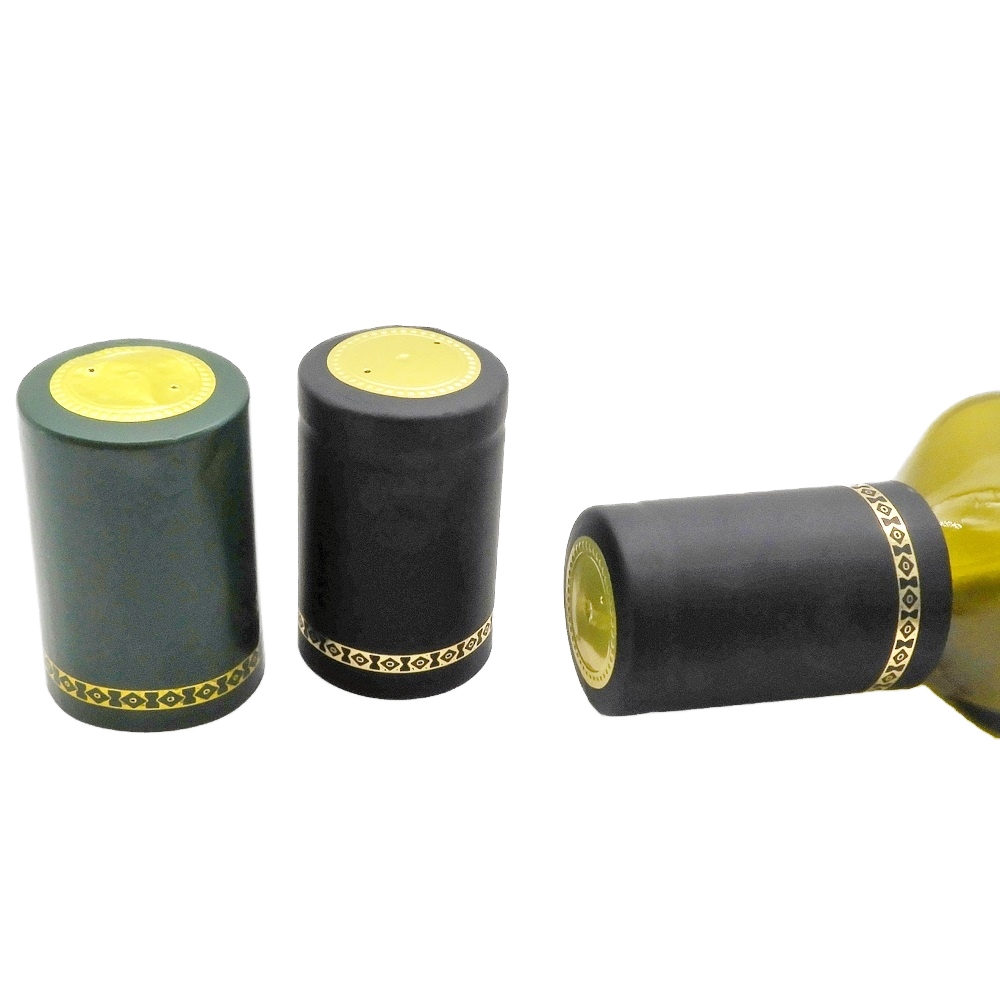
It goes over the neck and closure area as a secondary covering. I’d leave it off during the first closure trials. If a sample is leaking, you want to be able to examine the cap and insert without a decorative covering in the way.
Review coverage after the cap is fitted
The catalog’s PVC Capsule reference is 31.5×40 mm. Ask for it to be sampled with the cap already on the bottle. It’s easy to notice the repeated 31.5 and think the fit is settled. It isn’t: the capsule has to go over the closed pack before shrinking, and the shape it takes afterwards needs a look of its own.
I’d review the lower edge beside a provisional label. Is the neck coverage what you intended, and is there room between the capsule and the label? If the skirt is wrinkled or ends unevenly, ask the supplier to review the size and application settings. Keep the print layout provisional while doing that. If the height changes, the artwork may need changing too.
The PVC covering isn’t the primary oil seal. And if you need the first opening to leave visible evidence, make that a question for the supplier. How is it supposed to work on this pack? Check the answer on a sample rather than relying on the appearance of an unbroken sleeve.
When should labels and cartons be approved?
Once the bottle, insert, cap and capsule have been tried together, you have a useful sample for the rest of the packaging discussion. Until then, some of the dimensions surrounding the artwork remain provisional.
Work from the assembled pack
Try the actual label on filled glass, checking the edges on the square body and its position below the neck covering. Cap color and logo printing can be coordinated with it, using editable artwork and an agreed color reference. Keep a record of the approved appearance so that "the green cap" doesn’t become the only description available to purchasing.
For the carton, specify the case count and filled weight. Try the proposed arrangement with the closed bottles, including the intended separation between them. On unpacking, look for rubbing against labels or closure tops and for room that allows excessive movement. Each capacity needs its own packing review; the catalog doesn’t provide a carton specification to substitute for it.
What can Yantai Original help coordinate?
You can take this combined enquiry to Yantai Original Import and Export Co., Ltd. for the glass bottle, closure and related carton packaging. The company asks for drawings or samples during size confirmation, before moving on to decoration. For this Marasca pack, that gives the buyer a way to discuss the cap and bottle against the same sample rather than arrange them as unrelated purchases.
Send the capacity and color for each bottle, quantities, both catalog size references and the oil to be filled. With the artwork, add a note about what you expect from pouring and first opening. You can then request prices and the specifications of the proposed parts, with samples arranged for the trial. Leave MOQ and timing as questions until the supplier has reviewed this particular order.
Conclusion
I’d keep a finished sample with the order documents. Check that the cap, insert and capsule described there are the versions you tried. The catalog gives you a Marasca bottle range and two useful size references. By the time you order, those references should be backed by the sample approvals, not still waiting for a fit decision.
FAQs
Does every capacity have the same catalog closure reference?
Yes. Reading down the catalog, you’ll find 31.5×24 mm in every cap row and 31.5×40 mm in every capsule row. That still leaves the fit of each selected bottle to confirm.
Is the stopper in this cap made of glass?
The matching cap product page describes a plastic pouring insert inside an aluminium outer shell. It should not be described as a glass pourer.
Can the PVC capsule correct a leaking closure?
No. Leave it off while you work out why the closed bottle leaks. The problem needs resolving in the bottle, cap and insert combination before the pack is dressed.


