


If your purchase enquiry says “matching cork,” it may be worth another look. What counts as matching, though? The color of the top? Its diameter? Whether the cork can actually hold the liquid? For a vodka brand buying packaging, that little word leaves quite a lot unanswered. I’d want the sample bottle closed, with the intended capsule on it, before calling the combination ready to order.
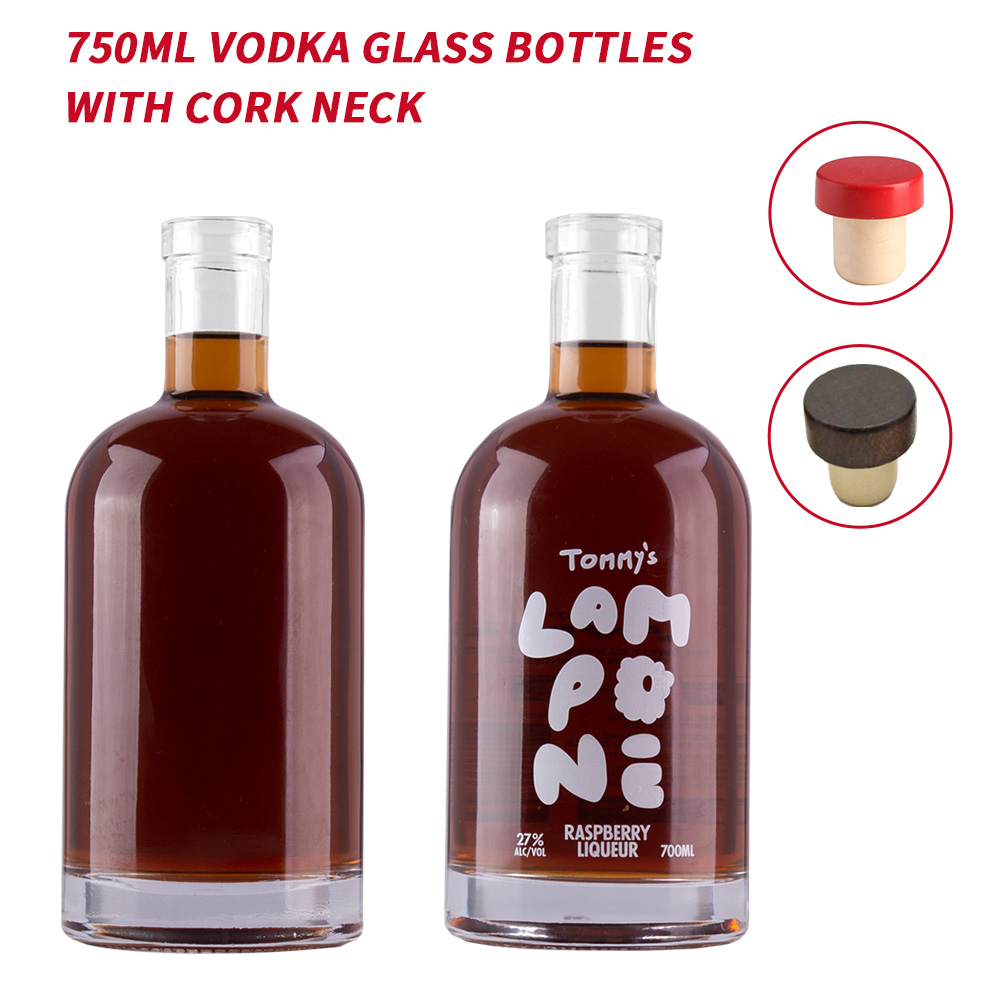
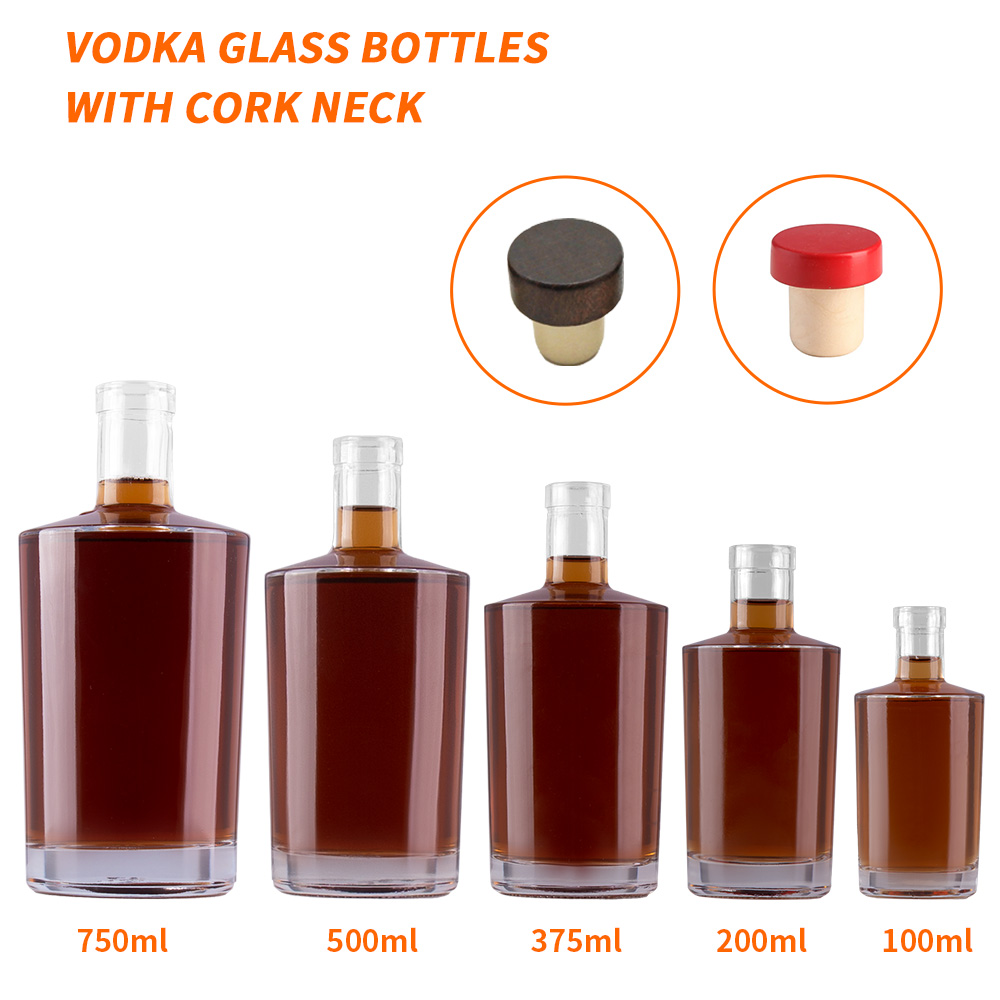
This guide concerns the cork-finish Vodka Bottle in the catalog. On that page, the smallest flint bottle holds 100 ml and the largest 750 ml. Between them sit 200 ml, 375 ml and 500 ml versions. Beside the smallest one you’ll find a 14×26 mm PVC capsule reference. Beside each of the others it’s 19×29.5 mm. I’d quote the relevant reference when asking for samples, leaving room for the supplier to check it against the actual neck and stopper.
Where should a bottle enquiry start?
With the size you’re going to sell, rather than the nicest photograph in the range. Say you’re considering both a small bottle and a full-size one. That’s two sample approvals, even if the artwork will be much the same.
The drawing needs to belong to the sample
For clear glass bottles, a drawing ought to identify the body dimensions and the neck, inside and out. The mouth bore is the part the stopper must fit. The outside neck gives you something to work from when discussing capsule coverage. I’d want to find the weight there too, along with the height and brimful capacity. The label designer will need to know how much of the body is available to work with.
Which drawing goes with this sample? You ought to be able to answer without having to search through old emails. Otherwise, when someone asks which bottle a measurement came from, you have a loose drawing and several similar-looking pieces of glass. A sample reference is a modest addition to the paperwork, but worth making. The bottling team can then record its line settings against that reference instead of an informal description such as “the tall one.”
What does cork finish tell you about the closure?
Less than you might hope. It describes the mouth style; it isn’t a stopper specification. In this catalog, the pictured stopper has no dimensioned drawing alongside it. Buying a particular stem size on the strength of the picture would mean filling in information the catalog hasn’t given you.
Leave the capsule off for the first trial
The closure supplier needs the mouth dimensions and a bottle sample. You need the proposed stopper’s material and measurements, including the stem and top. Then there is the physical trial. Does it seat at the intended depth? Is removal reasonable for the customer? Does the closed bottle leak? These aren’t questions a photograph can answer, however convincing the mock-up looks.
I’d also include reopening in the trial if the bottle is meant to be used that way. A stopper being inserted successfully once doesn’t answer the repeat-use question. How much force is acceptable? That needs a conversation with the closure supplier and filling team. There isn’t a test-force figure in the catalog to quote here.
When checking a glass bottle with stopper, resist the temptation to dress the sample before you’re happy with how it closes. Leave any fit problem visible while you resolve it. A loose stem beneath a tidy PVC capsule is still a loose stem.
How should the PVC capsule be checked?
You’ll already have the catalog reference in your sample request by this point. The 100 ml bottle uses the smaller one. For a project covering any of the other capacities, the question now is whether that shared 19×29.5 mm reference works on every chosen sample. It doesn’t tell us that the necks are identical. I’d keep the trials separate rather than let one good result stand for the whole range.
Give the artwork a confirmed shape to fit
The sample for a heat shrink capsule for wine or vodka bottles should go over the selected stopper, already seated in the bottle. There has to be room to put it on before shrinking it. Afterwards, you’re looking at the coverage and lower edge, along with wrinkles or an uneven skirt. Application settings matter here as well as dimensions.
There is little point signing off the print position while you’re still debating the height of the capsule. A later size change sends the logo back to the designer. Let the designer work from the dimensions that passed the trial, with an editable file for the supplier and a reference for the color. If you want an easy-tear detail, ask whether it’s available in the proposed structure. The same goes for the surface finish; a photograph alone isn’t an agreement to supply it.
What changes when labels and cartons enter the order?
You stop looking at individual parts and start looking at the thing the customer will receive. A neck that looked fine on its own may need another look beside the front label. And anyone making a case for it needs to know where the stopper top ends, not just where the glass ends.
An empty bottle isn’t the whole label mock-up
Flint glass is clear. That brings the back label into the discussion as well as the front one. Fill a sample and turn it around: what shows through? You may want to alter the layout after seeing it on glass, even if you liked it on screen. Edge lift, bubbles and barcode readability also belong in this review. Once the position is agreed, put its dimensions in writing; “a little lower” isn’t much use to the person setting up the labeler.
The case has to fit the closed bottle
How many bottles will you pack together, and what will they weigh when filled? Those are questions to take into a discussion of carton box options. I’d check the space above the stoppers while looking at the dividers between the bodies. Bare glass isn’t the finished height. Use filled samples, or simulate their weight, for the packing trial. Then unpack them and look for movement or scuffing. If the case has been pressing on a closure, that’s a reason to revisit the arrangement before signing it off.
Can you discuss the components with one supplier?
You can take this enquiry to Yantai Original Import and Export Co., Ltd. for glass bottles, closures and related packaging. I would send the quantities broken down by bottle size, with the drawings and artwork attached, rather than just an overall total. Mark anything you haven’t approved yet as pending. Your filling and shrinking equipment, packing requirement and destination are useful information too. The proposed combination still needs your sample approval.
Conclusion
I’d keep one finished, approved bottle with the purchasing specification. It gives everyone a shared reference for the stopper position, capsule edge and label layout. The catalog gets you started with capacities and capsule sizes. Before committing to volume, you still need to see how your chosen parts behave together.
FAQs
What should I quote when enquiring about the small bottle’s capsule?
14×26 mm. That’s the catalog reference for the 100 ml flint Vodka Bottle, subject to checking it on the closed sample.
What about the other capacities?
For any of the four larger versions, quote 19×29.5 mm PVC. That covers the catalog references from 200 ml through to 750 ml, including 375 ml and 500 ml. I’d still ask to try it on each size being ordered.
What if the cork feels loose beneath the capsule?
Go back to the stopper fit. It’s the cork or stopper that closes the bottle, regardless of how neatly the capsule sits over it. The PVC covering won’t make up for a poor seal.


